Search for a 250W electric bike for sale and you will find 500W and 750W bikes listed right beside it. Bigger numbers look better on paper, so it is fair to ask whether 250W is enough. The short answer depends on what the number means and where you plan to ride. This guide covers what UK rules allow, how rated power differs from peak power, and what trail riding really asks of a motor. We use the isinwheel M50 full suspension electric mountain bike as the worked example, because its spec sheet shows every idea in one place.
What the UK Rule Means for a 250W Electric Bike for Sale
In Great Britain, an electric bike that meets the electrically assisted pedal cycle (EAPC) rules is treated like a normal bicycle. The gov.uk electric bike rules set out what that takes. An EAPC must:
- have pedals that can propel it
- have a motor with a maximum continuous rated power of 250W or less
- stop motor assistance at 15.5 mph
Put simply, 250W electric bike UK law comes down to pedals, rated power and a speed cut off. Meet all three and you need no licence, tax or insurance, and the rider must be at least 14. Miss any one and gov.uk treats the bike as a motorcycle or moped, which must be registered and taxed.
That is why the label matters. A bike sold as an EAPC should show the manufacturer, the motor power and either the battery voltage or the top speed. If a listing leaves those out, ask the seller before you buy.
Rated Power and Peak Power on an Electric Bike Label
Two wattage figures often sit side by side on a label, and they measure different things.
- Rated power is what the motor can sustain. The law counts this number.
- Peak power is a short burst, such as when you pull away on a slope. The law does not count it.
The M50 shows both: a 250W motor with a 750W peak. That is how a bike can follow the 250W rule and still feel lively when the trail tips upward. The peak figure simply describes what the motor can deliver for a few seconds.
Be careful when a listing shows only a big number such as 500W or 750W. Look for the word "rated" or "continuous" beside it. If you cannot find one, ask.
250W Electric Bike Top Speed: The 15.5 mph Assist Limit and What Happens Above It
The 250W electric bike top speed under motor power is 15.5 mph (25 km/h). The M50 has a default top speed of 15.5 mph. Once you reach it, the motor stops helping and you carry on under your own pedalling.
That cut off feels like riding a normal bike that happens to weigh 28 kg. The law limits the motor, not you. You can still roll faster downhill, and the bike stays an EAPC the whole time.
The opposite case matters more. A bike whose motor keeps assisting above 15.5 mph is not an EAPC, whatever the listing calls it, and gov.uk says it must be registered and taxed. Buy a bike whose default setting follows the rule, and ride it that way.
Does a Full Suspension Electric Mountain Bike Like the M50 Need More Than 250W?
Not for most UK trail riding. Motor wattage is only one piece of the picture, and the M50 pairs its 250W motor with a package built around control:
- Motor: 250W rated, 750W peak
- Default top speed: 15.5 mph
- Battery: 36V 13Ah (468Wh), removable
- Range: up to 70 miles (check the live product page)
- Frame: full suspension with a 4 link design
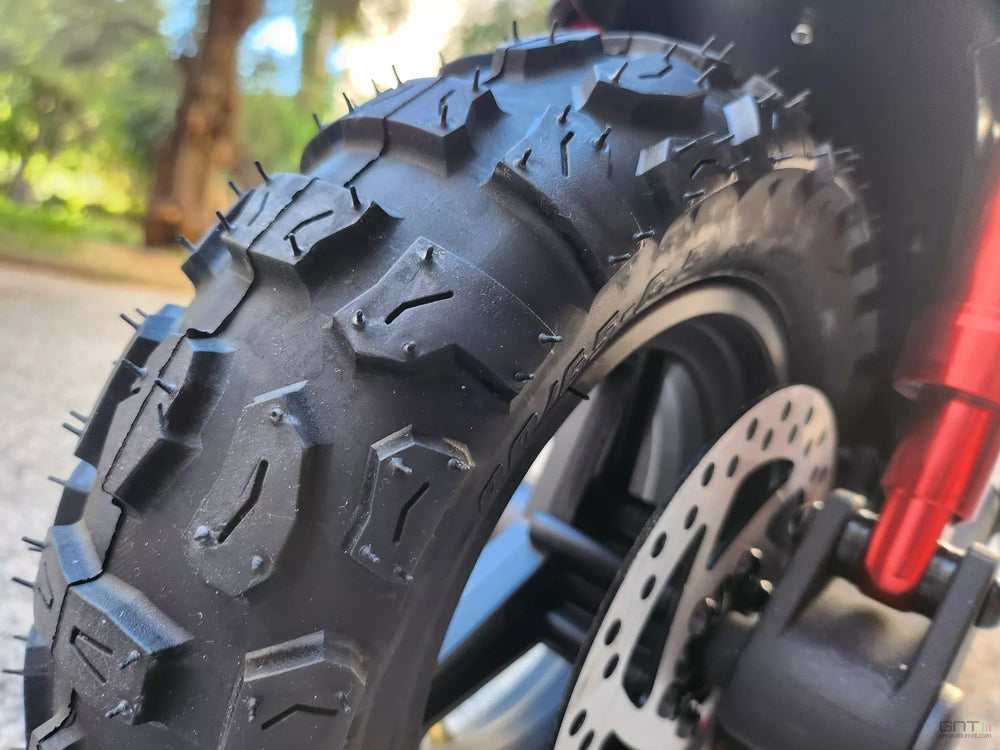
- Tyres: 27.5 x 2.3 inch
- Gears: 7 speed Shimano
- Brakes: dual disc
Here is what that means on a trail. A full suspension electric mountain bike keeps the wheels in contact with the ground over roots and ruts, so you steer and brake with more confidence. The wide 2.3 inch tyres add grip on loose surfaces. The 7 speed gears let you hold a steady pedalling rhythm when the path steepens, which helps the motor more than extra watts would.
If you are comparing an ebike full suspension mountain bike, check the suspension design, tyre width and brakes before you compare wattage. One owner on the product page says they ride the M50 as a mountain bike and use the assist only when a climb gets hard. That is a fair picture of how 250W is meant to work.
Battery Size, Range and Slopes: Is a 250W Electric Bike Powerful Enough for Hills?
Think of watt hours (Wh) as the fuel tank and watts as how quickly you use it. The M50 battery holds 468Wh. At a steady 250W of motor output, that tank would last a little under two hours. Easy riding on a low assist level uses far less, which is why a headline range of up to 70 miles is possible in ideal conditions.
So, is a 250W electric bike powerful enough for hills? For most rides, yes, as long as you use the gears and keep pedalling. The 750W peak helps when you pull away on a slope. The real limit is a long, steep climb with a heavy rider or a loaded bike. That tests any 250W motor and drains the battery quickly. A few habits help:
- Shift to a lower gear before the slope, not halfway up it.
- Keep a steady pedalling rhythm. Hard stops on a climb waste battery.
- Pick a medium assist level and save the highest for the steepest section.
- Charge fully before a route with long climbs.
Our ebike power guide goes deeper on climbing and motor power for UK riders.
250W or More Power? Checks to Make Before You Choose an E-Bike
If 250W still worries you, check the whole bike rather than chasing a bigger number. Look at:
- Peak power and torque, which decide how the bike feels when you pull away on a slope
- Battery voltage and Wh, which show how much energy is on board (468Wh on the M50)
- Gearing, because a wide range makes climbs easier
- Load capacity, which is 330 lbs (150 kg) on the M50
- Brakes and suspension, which matter most on descents
Leave the motor, controller and battery as they come. gov.uk warns that changing them to raise power can mean the bike is no longer an EAPC.
500W E Bikes for Sale: What the Number Usually Means
Listings for 500w e bikes for sale usually mean one of two things. Either 500W is a peak figure on a bike with a 250W rated motor, or the motor is rated above 250W and sits outside the EAPC rules. In the second case the bike counts as a motorcycle or moped. Ask the seller which it is, and ask them to confirm that the bike meets UK EAPC rules.
Buying a 250W Electric Bike for Sale Near London
If you want a 250W electric bike for sale near London, delivery and a test ride tend to matter most. isinwheel ships from a UK warehouse with free UK delivery, and its Test Ride page lists local partners. You can also browse the full range of electric bikes to compare rated power, peak power and battery size for each model.
Frequently Asked Questions
Does the 15.5 mph limit on a 250W electric bike stop me riding faster downhill under my own power?
No. The limit applies to motor assistance only. Above 15.5 mph the motor stops helping, but gravity and your legs can still take you faster. Brake early on loose descents. The M50 has dual disc brakes for that job.
Can I use the 22 mph unlock mode on a 250W electric bike on public roads?
No. On public roads and cycle paths, motor assistance must stop at 15.5 mph. A bike whose motor can assist beyond that is not an EAPC and must be registered and taxed. Ride the default 15.5 mph setting on public roads.
How much does rider weight affect the quoted 60 to 70 mile range of an electric bike?
A lot. Range figures come from best case conditions: a light load, flat ground and low assist. A heavier rider, long climbs, headwinds and high assist levels all shorten it. The M50 carries up to 330 lbs (150 kg) on a 468Wh battery, so plan on less than the headline figure for hilly routes and check the live product page for the current range.


















Leave a comment