













Are Cyclists Allowed on A-Roads in the UK?
Are cyclists allowed on A-roads in the UK? Yes. Cycling on A-roads is legal for anyone riding a standard bicycle or a road-legal electric bike, and these routes form an essential part of the UK's cycling network. A-roads connect towns, cities, and major transport hubs, so cyclists rely on them for commuting, training rides, and longer journeys where minor roads simply do not connect the same places. This guide covers the cycling rules UK riders need to know, including the Highway Code cyclist requirements, current UK bike laws, and the practical steps that make riding on a busy A-road safer and more comfortable.
Can Cyclists Ride on A-Roads in the UK?
Yes, cyclists can legally ride on any A-road in the UK unless a specific traffic sign says otherwise. A-roads are ordinary public highways open to all traffic, including pedal cycles and road-legal electric bikes. The only roads where cycling is banned outright are motorways, which fall under separate legislation because they are built exclusively for motor vehicles.
Some fast dual carriageway sections, and roads carrying an M designation such as the A1(M), are legally classed as motorways rather than ordinary A-roads, and these display a red circular sign showing a bicycle to confirm cycling is prohibited. Away from these specific sections, cyclists are free to use A-roads, including dual carriageways with a 70mph limit, provided they ride with appropriate care and follow the guidance in the Highway Code.
UK Cycling Laws and the Highway Code
The cycling rules UK law sets out sit mainly within Rules 59 to 82 of the Highway Code, known as the rules for cyclists. These cover clothing, lighting, road positioning, junctions, and roundabouts, and several of them are legal requirements rather than suggestions. Between sunset and sunrise, a cycle must show a white front light and a red rear light, along with a red rear reflector; riding without lights after dark is an offence. Cyclists must also not ride on the pavement, since footways are reserved for pedestrians unless a section is specifically marked as a shared use path for cycling.
A 2022 update introduced the Hierarchy of Road Users, made up of Rules H1, H2, and H3. This hierarchy places the road users most at risk in a collision, pedestrians first, then cyclists, then horse riders, ahead of motorised traffic, and puts extra responsibility on drivers of heavier vehicles to look out for people cycling nearby. Riding two abreast is explicitly permitted under Rule 66, particularly in groups or when accompanying children, though single file is safer on narrow roads or bends.
A cycle helmet is strongly recommended but not a legal requirement. For a fuller breakdown, see our guide on whether cyclists have to wear a helmet in the UK.
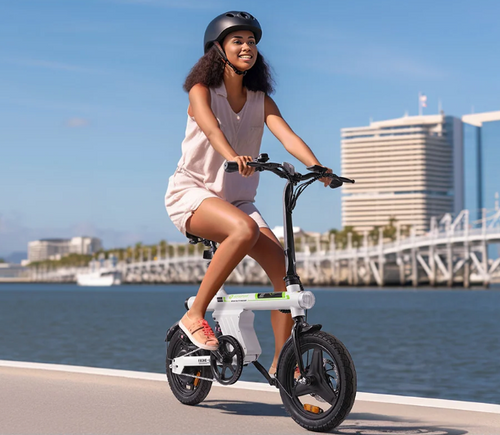
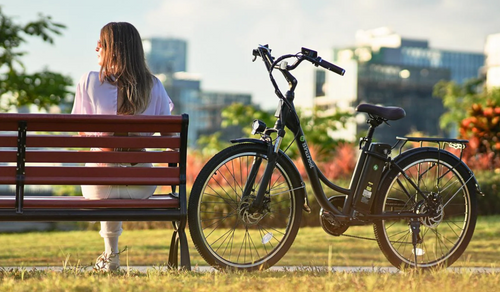
The same rules apply to riders on an electrically assisted pedal cycle, or EAPC, provided the bike meets the legal specification: pedal assistance only, a motor rated at no more than 250 watts continuous power, assistance that cuts out at 15.5mph, and a minimum rider age of 14. A compliant EAPC electric bike is treated in law exactly like an ordinary bicycle, so it can use A-roads, cycle lanes, and any route open to cyclists without registration, insurance, or a licence.
This is different from a privately owned electric scooter, which UK law still classifies as a motor vehicle. Outside government approved rental trial areas, e-scooters cannot legally be ridden on public roads or pavements; riders considering one should check the UK e-scooter usage notice before heading out.
Bike Rules UK Cyclists Should Follow on A-Roads
Good road positioning keeps you visible and predictable. On approach to junctions or roundabouts, moving into a primary position toward the centre of the lane stops drivers from squeezing past where there is not enough room, and Rule H3 requires drivers turning across a cyclist's path to give way rather than cut in. Away from junctions, riding around half a metre to a metre from the kerb, rather than hugging the edge, gives more room to react to drains, potholes, and parked vehicles. Always signal clearly before changing position or direction so following traffic has time to respond.
Essential Gear for A-Road Cycling
The right equipment makes a real difference to comfort and visibility on faster roads.
-
Helmet: a well fitted helmet that meets current safety standards reduces the risk of head injury, even though wearing one is a personal choice rather than a legal duty.
-
Lights and reflectors: a white front light, red rear light, and rear reflector are a legal requirement after dark and are genuinely useful in poor daytime visibility too.
-
High visibility clothing: bright or fluorescent layers, ideally with reflective strips, help drivers spot you sooner, particularly at dawn, dusk, or in wet weather.
-
Gloves and protective gear: padded gloves reduce hand fatigue on longer rides, and optional knee or elbow protection adds peace of mind on unfamiliar roads.
-
Basic maintenance kit: a pump, spare inner tube, and multitool mean a puncture or loose bolt does not turn into a long walk home.
Practical Tips for Confident A-Road Riding
Planning ahead makes A-road cycling far less stressful. Choose quieter sections or off peak times where possible, and use route planning apps that flag traffic volume so you are not forced onto the busiest stretch of dual carriageway. Ride defensively by scanning well ahead for junctions, brake lights, and vehicles pulling out, since anticipating a hazard early gives you far more options than reacting at the last second.
Keep your bike in good working order, checking brakes, tyres, and lights before any longer ride, and carry a phone plus emergency contact details in case you need help quickly. If conditions genuinely feel unsafe, such as during heavy fog or after dark on an unlit stretch, it is always reasonable to choose an alternative route or wait for better conditions.
FAQs
Are cyclists allowed on a road in the UK?
Yes. Cyclists can legally ride on every public road in the UK except motorways and any A-road section specifically signed as prohibited to cyclists. Following the Highway Code's cyclist rules on lighting, positioning, and signalling keeps every ride safer.
Are cyclists allowed on a dual carriageway?
Yes, cyclists can use dual carriageway A-roads unless a red circular no cycling sign says otherwise. Because traffic moves faster on these roads, taking a confident road position and using lights even in daylight is particularly important.
Are cyclists allowed on pavements?
No. Rule 64 of the Highway Code states that cyclists must not ride on the pavement, since it is reserved for pedestrians. Cyclists can only use a footway where a section is officially marked as a shared use path for cycling and walking.
Can cyclists ride two abreast on UK roads?
Yes. Rule 66 of the Highway Code allows cyclists to ride two abreast, and it can be safer in groups or when riding with children. Moving into single file on narrow roads, bends, or when a following vehicle wants to overtake is good practice.
Can e-bikes ride on A-roads in the UK?
Yes, provided the e-bike meets the EAPC rules: pedal assistance only, a motor of no more than 250 watts, and assistance that cuts out at 15.5mph. A compliant isinwheel electric bike is legally treated the same as a bicycle, so it can use A-roads, cycle lanes, and shared use paths under the same rules as any other cyclist.
The Latest Posts


Explore isinwheel products
City E Scooter | Off-Road Scooter
Fastest Scooter | Kids Scooters







Leave a comment