Electric scooters seem to be everywhere, so you could be forgiven for assuming they are allowed. Are e scooters legal, then? Half yes, half no. You can buy and own a private electric scooter in the UK. You just can't ride it in public.
This guide uses gov.uk guidance to show where you can and cannot ride, how rental trials differ, and what happens if you get it wrong. At isinwheel, we would rather you read this before you buy than after.
Are e scooters legal? What the law says in 2026
Owning one is legal. Riding a private one in public is not. That is the core of electric scooter law UK 2026, and the rules for private scooters have not changed.
The reason sits in the Road Traffic Act 1988, which defines a motor vehicle as any mechanically propelled vehicle intended or adapted for use on roads. Government guidance treats electric scooters as powered transporters, so motor vehicle rules apply to them.
On a public road, that means insurance, registration, vehicle tax, a driving licence and approved construction. Gov.uk says riders will find that very difficult.
So, are electric scooters legal in the UK for private owners? Yes, on private land with the landowner's permission. No, on roads, pavements, cycle lanes and in parks. You can read the official wording in the gov.uk rules for riding an electric scooter.
Rental electric scooter vs a private e scooter
Rental schemes are the only legal way to ride an electric scooter on public roads. The electric scooter rental trial UK wide began in July 2020 under the Department for Transport (DfT). It now runs until 31 May 2028 after five extensions.
Trial scooters run under special regulations that private scooters do not share. The operator provides insurance, speed is capped, and use is limited to official trial areas. The gov.uk guidance for rental trial users covers the full rules. Helmets are recommended for rental riders but are not a legal requirement.
Rental trial rules at a glance
-
Licence: a full or provisional UK driving licence with category Q entitlement. Category AM, A or B covers it.
-
Insurance: the operator provides third party motor insurance.
-
Speed: rental scooters top out at 15.5mph, and some areas set a lower limit.
-
Where: roads (not motorways) and cycle lanes in an official trial area. Never the pavement.
E scooter London legal status: rental only
If you are checking whether an e scooter is legal in London, the answer matches the rest of the UK. London is an official trial area, but only in participating boroughs, and only for rental scooters. A private scooter is just as illegal on London's public roads as anywhere else. Trial areas change, so check the current list before you rely on one.
Are e scooters legal on private land? Permission, boundaries and public access
Can you ride an electric scooter on private land?
Yes, if the owner or occupier gives permission. Gov.uk guidance says there are no statutory restrictions on private land that the public cannot access. Our UK e-scooter usage notice says the same: use privately owned isinwheel electric scooters only on private land, with the landowner's permission.
Where private land ends and public access begins
Land owned by a business is not automatically private in this sense. Gov.uk guidance says road rules still apply to places the public can reach. Examples include car parks, privately owned roads, industrial estates, university campuses and public squares that are not pedestrian only.
Boundaries matter on farmland too. A farm track may be private, but a public footpath, bridleway or restricted byway crossing it is not. Powered transporters are banned from all three. Cycle tracks and cycle lanes are off limits as well, and riding on a pavement is an offence under the Highway Act 1835.
Honestly, the easy fix is to ask first and keep the reply. Then check where your permission ends and the public route begins.
Penalties on roads, pavements and cycle lanes
Using a private electric scooter in public is a criminal offence. Gov.uk says you could face a fine, penalty points on your driving licence and seizure of the scooter. Local police forces enforce the law. Our usage notice lists the same outcomes, plus penalties for riding without appropriate insurance.
The e scooter penalty points UK riders worry about most come from driving without insurance. Gov.uk gives a £300 fixed penalty and six penalty points for that offence. If the case goes to court, the fine is unlimited and you could be disqualified from driving. A 2002 High Court case confirmed that an electric scooter user needed insurance.
Several offences can apply at once, such as no insurance, no licence or dangerous riding. Drink and drug driving laws apply too, and the worst cases can lead to prison. Courts decide the final outcome, so treat these figures as a starting point.
What the pending e scooter bill does and does not change
The bill most people mean is the E Scooters (Safety and Sale) Bill. Baroness McIntosh of Pickering introduced it in the House of Lords on 16 September 2026. It is a Private Members' Bill rather than a government plan, and it had only reached first reading at the time of writing.
According to its long title, the bill would:
- set safety requirements for e scooters offered for sale, including limits on speed and power output;
- ban marketing, selling and supplying e scooters for use on roads or public places where that use is unlawful;
- add consumer information rules for sellers;
- give trading standards officers and police powers to enforce the rules, including seizing e scooters offered for sale that do not comply.
What it does not do is legalise riding a private electric scooter on public roads, pavements or cycle lanes. It would also need to pass both Houses of Parliament before becoming law.
Separately, the government said in 2026 that it would consult on detailed e scooter proposals and legislate when parliamentary time allows. The May 2026 King's Speech did not include a dedicated e scooter bill. Until Parliament changes the law, the rules above apply.
Buying before the law changes: what to check
A purchase today should suit the law as it stands, not the law you hope for. Selling an electric scooter for private land use is not illegal, but the government says retailers must not mislead buyers and must state the legal restrictions clearly.
Before you buy, check:
- Your riding space: land you own or have permission to use, with no public rights of way across it.
- The seller's wording: restrictions on public use should be stated plainly, as they are in our notice.
- The rules on the day: gov.uk wording can change, so recheck before your first ride.
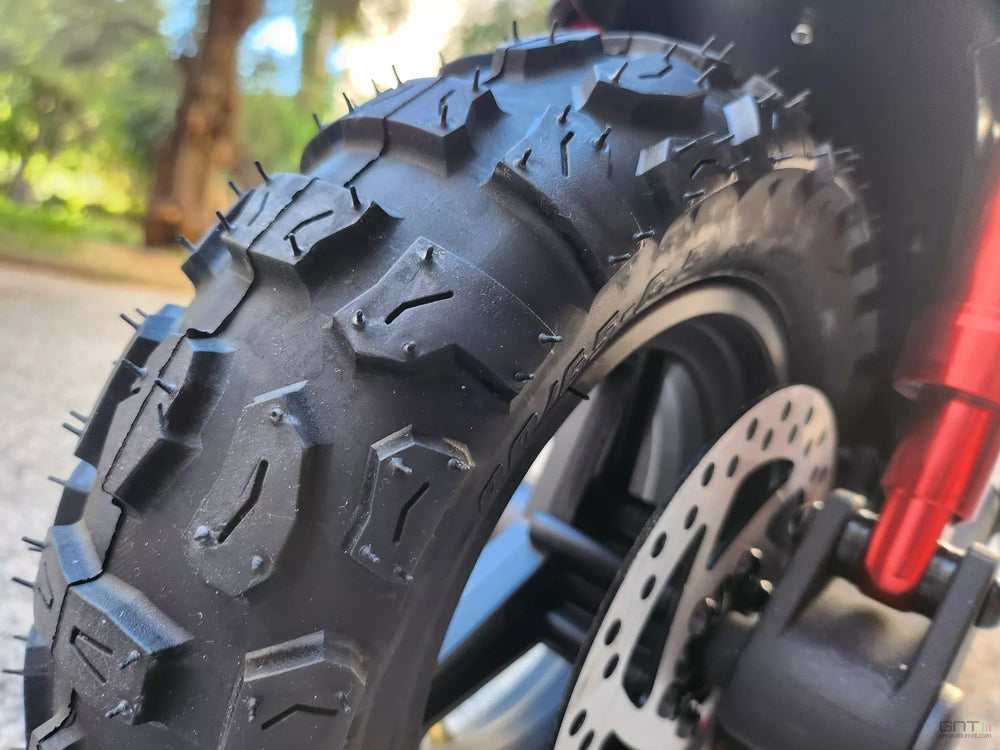
- Ground and gear: rough private land calls for pneumatic tyres, suspension and good brakes, plus a helmet.
If your only riding space is public, a private electric scooter will sit unused until the law changes. Electric bikes follow a separate legal framework, so read that guidance instead.
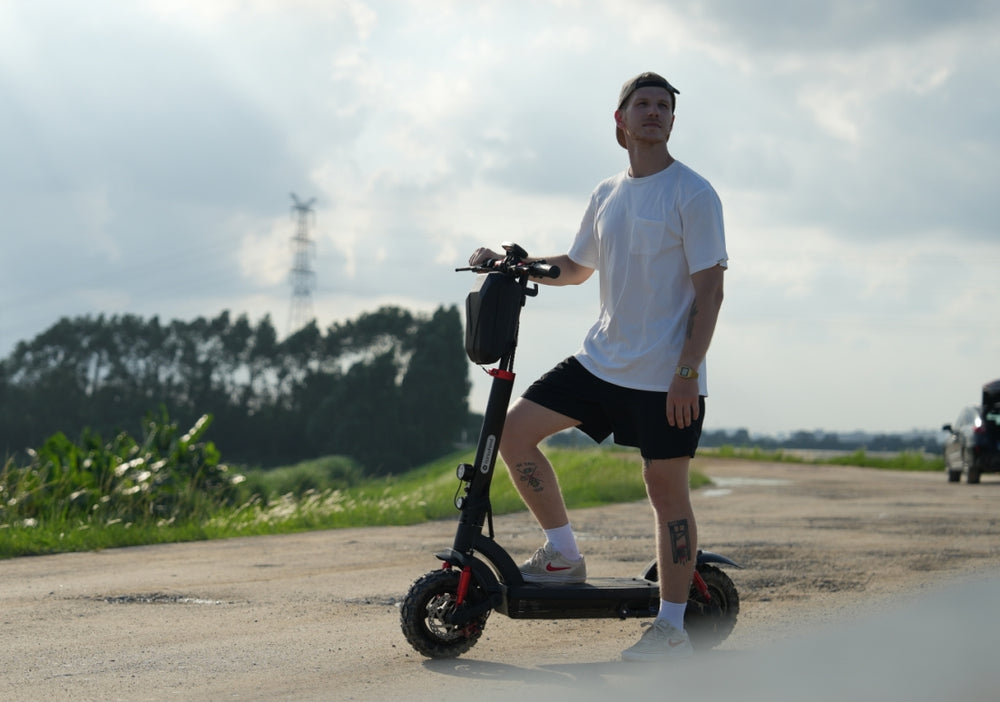
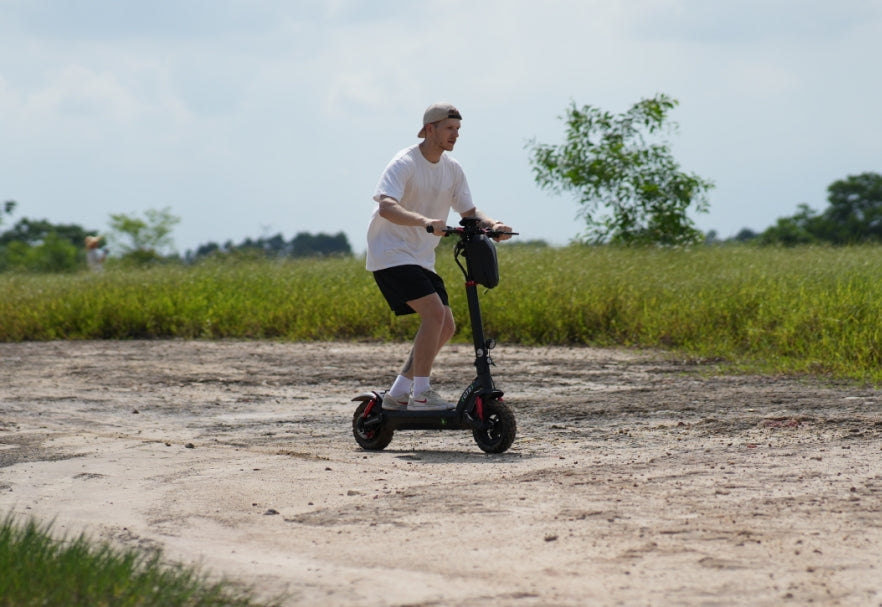
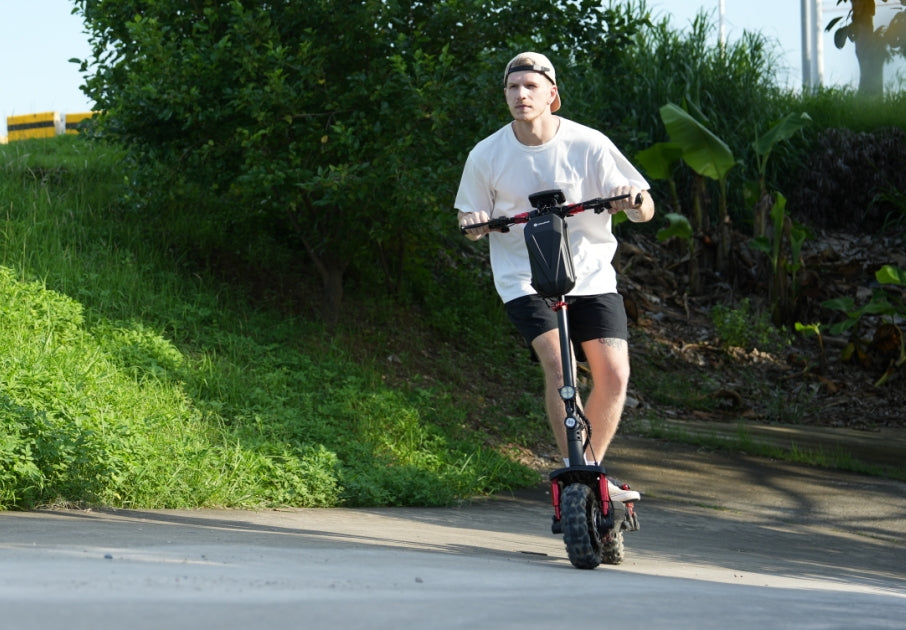
If you do have private land to ride on, browse our off road electric scooters. The isinwheel GT1 800W off road electric scooter pairs an 800W brushless motor with 10 inch pneumatic tyres, front and rear suspension and disc brakes. Like every isinwheel electric scooter, it is for private land with the landowner's permission only.
Frequently Asked Questions
What age and licence do I need to ride a rental electric scooter in the UK?
You need a full or provisional UK driving licence with category Q entitlement. Licences covering category AM, A or B include it, and provisional holders do not need L plates. The trials were designed for riders aged 16 and over, and operators can set a higher minimum age.
Are privately owned electric scooters legal on private land, such as a farm track or campsite?
Yes, with the owner or occupier's permission, as long as the public cannot access the land. A closed farm track can qualify. A public footpath or bridleway crossing it does not. A campsite open to the public may fall into the public access group, so ask the site owner and do not assume.
Do I need insurance to ride an electric scooter on private land?
Compulsory motor insurance applies on a road or in a public place. Land the public cannot reach sits outside that rule, though the landowner can still set their own terms. Always ask before you ride.





















Leave a comment