An electric scooter 30mph model sounds thrilling until you realise UK law treats it exactly the same as a 15mph one: illegal for public roads regardless of top speed. That catches a lot of buyers off guard, especially once they see wattage ratings climbing toward 1600W and 2400W on off road models. This guide cuts through the legal confusion with hard performance data. You will find out exactly where UK law stands on private electric scooters, how motor wattage actually translates into real world speed, and how isinwheel's GT1 Dual and GT4 stack up against each other on top speed, acceleration, and braking. By the end, you will know which model gets closest to 30mph and what gear you need before riding one flat out on private land.
Electric Scooter 30mph UK: What the Law Actually Says
UK law does not carve out an exemption for a fast electric scooter just because it happens to be quick off the showroom floor. Privately owned electric scooters are legally classed as powered transporters, which puts them under the same Road Traffic Act rules that apply to cars, so they need insurance, registration, and vehicle tax that no consumer model can currently obtain. That means riding one on a public road, pavement, or cycle lane is against the law, whether the scooter tops out at 15mph or 45mph.
The one legal use case for a private electric scooter, whatever its top speed, is on private land with the owner's permission. Government approved rental scooters are the only electric scooters currently allowed on public roads and cycle lanes, and they operate inside official Department for Transport trial zones that have now been extended until May 2028. Those trial scooters are capped well below 30mph and sit in a completely different category from the machines covered in this guide.
If you are buying an electric scooter 30mph or faster, plan to ride it purely off road, on land you have permission to use, such as a private estate, farmland, or a dedicated riding area.
How Motor Wattage Translates to Real World Speed
Motor wattage is not a direct speed dial, but it is the best single predictor of how a scooter behaves once you demand real power from it. An 800W motor, like the one in the standard GT1 Off Road Electric Scooter, comfortably reaches electric scooter 25 mph territory on flat, dry ground, but it works harder and loses speed faster on inclines or loose surfaces. Step up to 1600W spread across dual motors, as in the GT1 Dual, and the scooter holds closer to 30mph even on gravel or a moderate climb, because the second motor shares the load instead of one unit doing all the work.
At 2400W peak output across two motors, the GT4 crosses into genuinely fast electric scooter territory, reaching 45mph in dual motor mode. Riders shopping specifically for a 40 mph electric scooter will find the GT4 clears that mark comfortably, with headroom to spare. Anyone who only needs to touch 30mph can switch it into single motor mode, which caps out around 31mph and stretches the battery further. That flexibility is the real advantage of dual motor scooters over single motor ones chasing the same top speed: you are not locked into full power just because the hardware can deliver it.
isinwheel Off Road Electric Scooters: Comparing Top Speeds and Acceleration
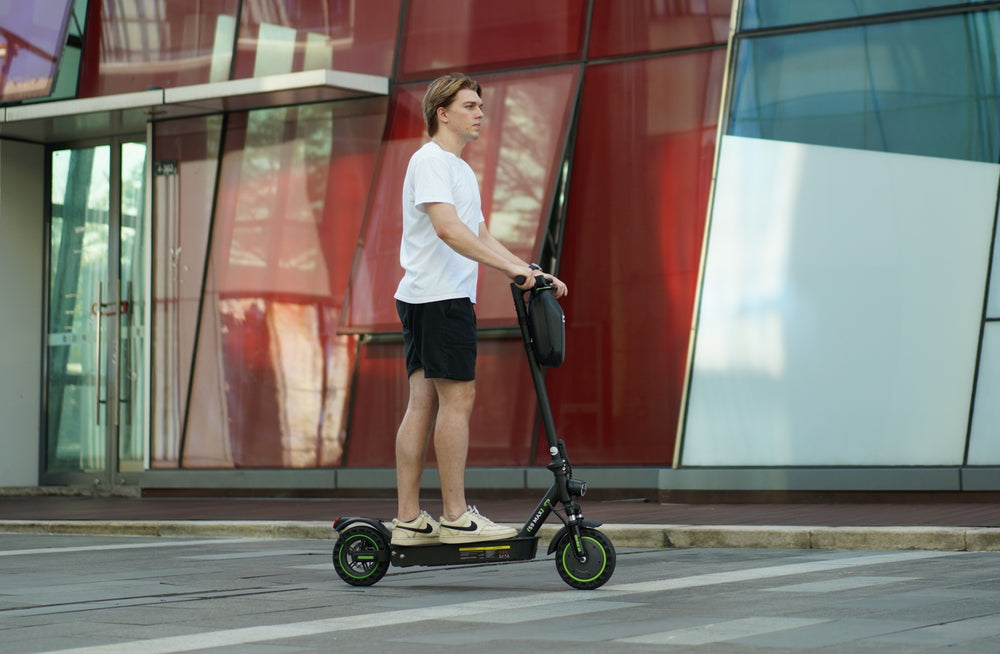
isinwheel's off road electric scooters range is built to answer this exact question, and it is a fast electric scooter uk buyers can order today, shipped from a UK warehouse in as little as one to two business days. Whether you are comparing this against other fast electric scooter for adults options or narrowing down within isinwheel's own line up, here is how the GT1 Dual and GT4 compare on the numbers that matter most for speed.
|
Images
|
|
|
|
Specification
|
GT1 Dual
|
GT4
|
|
Motor Power
|
800W × 2 (1600W)
|
1200W × 2 (2400W peak)
|
|
Top Speed
|
32 mph
|
45 mph (31 mph single motor)
|
|
Range
|
35 miles
|
50 miles
|
|
Battery
|
48V 13Ah
|
58.8V 18.2Ah
|
|
Climbing
|
35%
|
50%
|
|
Brakes
|
EABS + disc brake
|
Front & rear hydraulic disc brakes
|
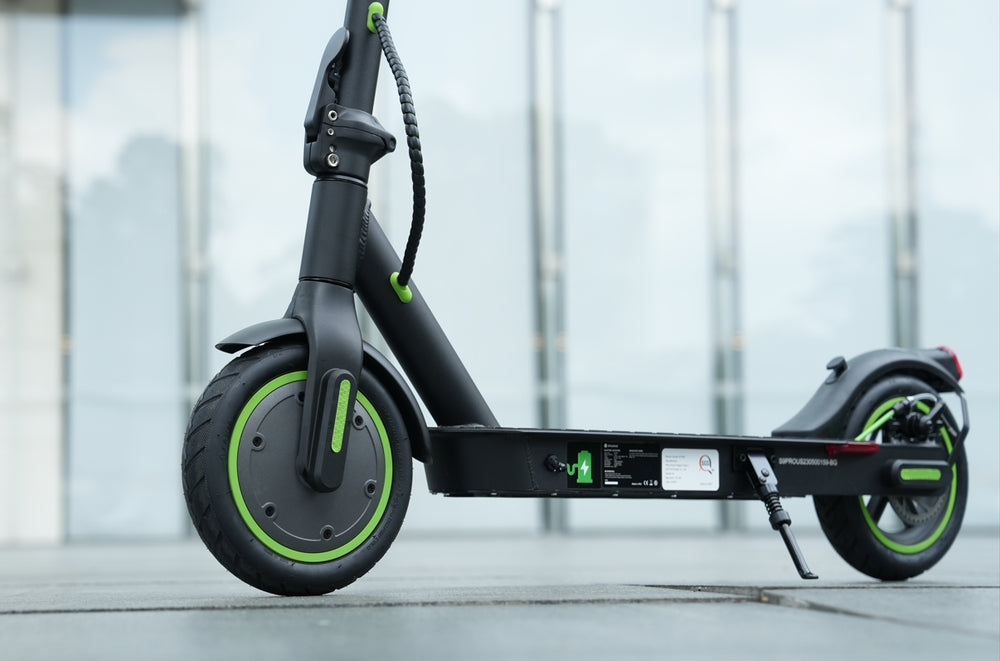
The GT1 Dual electric scooter and the GT4 dual motor scooter both clear the 30mph mark, but they get there differently. The GT1 Dual's twin 800W motors sprint from 0 to 20mph in about 3.5 seconds, while the GT4's 2400W peak output takes it from a standstill to 15mph in roughly 2 seconds. For a deeper breakdown of how these off road models stack up against faster options, see our high-speed scooter guide.
Braking Distances at Higher Speeds
Stopping distance does not grow in a straight line with speed, it grows with the square of it. Doubling your speed roughly quadruples the distance needed to stop, which is why a scooter capable of 30mph or more needs braking hardware built for the job, not just a bigger motor.
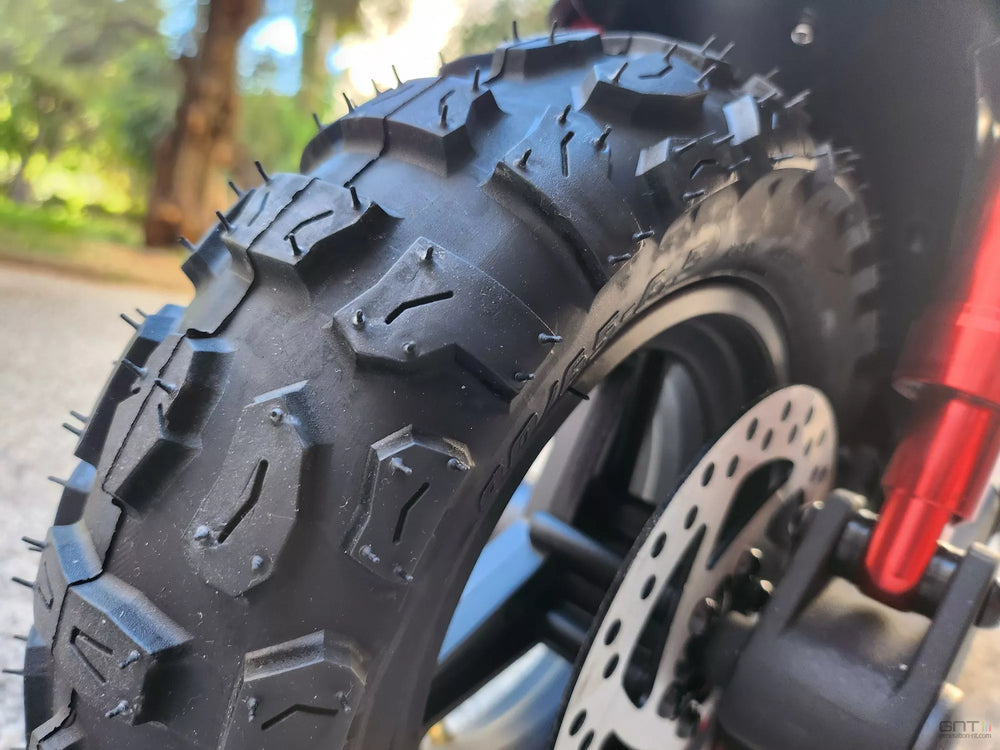
The GT1 Dual steps up to an EABS electronic brake system working alongside a mechanical disc brake, giving it more stopping power to match its higher 32mph ceiling. The GT4 goes furthest with front and rear hydraulic disc brakes on 160mm rotors, which isinwheel states cuts stopping distance by up to 50% compared with a standard mechanical setup. That kind of margin matters most exactly where you will use these scooters, on loose or uneven off road ground rather than dry tarmac.
Safety Gear for Fast Off Road Riding
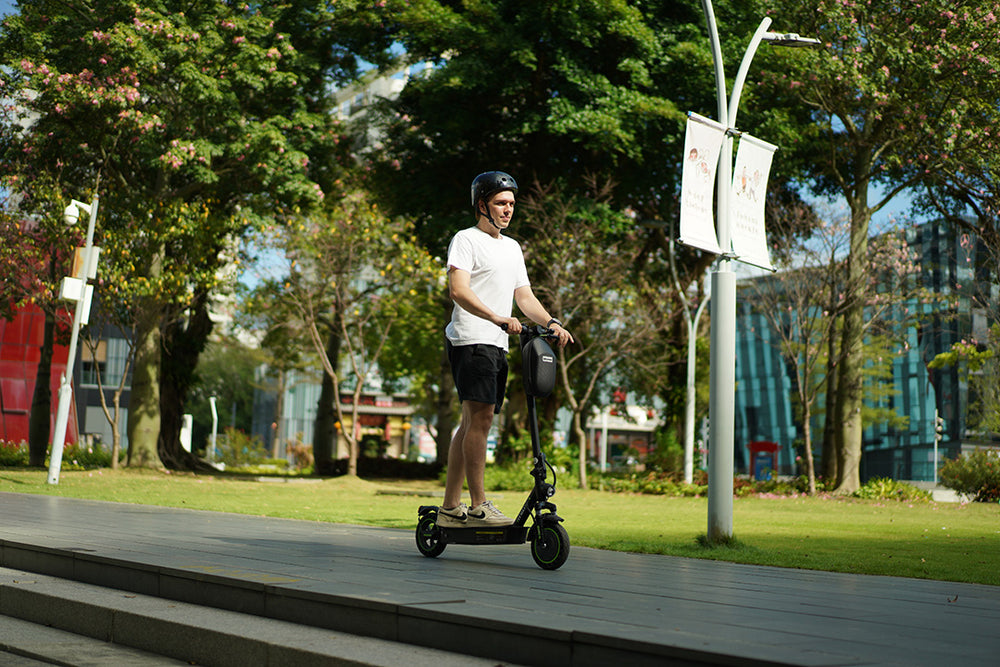
Riding a fast electric scooter at 30mph or above off road changes the calculation on protective gear compared with a gentle roll around the garden. A properly fitted helmet is non-negotiable, and at higher speeds a full face or off road style helmet offers more protection than a basic skate style shell. Pair it with gloves that have some palm padding, since a fall at speed on gravel or a dirt track is far more likely to involve your hands than a slow tumble on a smooth path.
Knee and elbow pads are worth the small bulk they add, particularly on unfamiliar off-road terrain where ruts and loose stones can catch a wheel without warning. Sturdy, closed toe footwear with good grip matters more than it seems, since your feet are your main point of balance at higher speed. Finally, wear something bright or reflective even in daylight, as off road trails often cross paths used by walkers and cyclists, and being seen early gives everyone more time to react.
The Bottom Line
A 30mph electric scooter is a serious step up from an entry level model, both in what it can do and in what it demands from the rider. UK law keeps every private electric scooter, fast or slow, off public roads and pavements, so the real question is not whether you can legally hit 30mph in traffic, it is how confidently you can handle that speed on private land. Between the three models covered here, the GT1 Dual sits right at that 30mph threshold with a manageable price and weight, while the GT4 gives you real headroom above it if you want to grow into higher speeds later. Either way, matching your brakes, tyres, and protective gear to your top speed is what turns a fast scooter into a genuinely enjoyable one.
Frequently Asked Questions
Is it legal to ride a 30mph electric scooter on UK roads?
No. Private electric scooters are not permitted on public roads, pavements, or cycle lanes in the UK regardless of top speed. An electric scooter 30mph can only be ridden legally on private land with the landowner's permission.
Which isinwheel scooter reaches 30mph or more?
The GT1 Dual reaches around 32mph in dual motor mode, and the GT4 reaches 45mph in dual motor mode or 31mph in single motor mode.
Does a faster top speed mean a shorter battery range?
Not necessarily. The GT4 has both the highest top speed and the longest range of the three models here, at 50 miles, thanks to a larger 58.8V 18.2Ah battery that offsets the extra power draw.
What safety gear is recommended for riding at higher speeds?
A properly fitted helmet, padded gloves, knee and elbow pads, and closed toe footwear with good grip are all recommended once you are riding above 25mph off road.
Do faster scooters need bigger brakes?
Yes. Higher top speeds need more stopping power, which is why the GT1 Dual uses an EABS plus disc brake system and the GT4 steps up to front and rear hydraulic disc brakes.








































Leave a comment