













How to Pump E Scooter Tyre: A Complete Step-by-Step Guide
Keeping the correct tyre pressure is one of the easiest ways to look after your electric scooter, yet it is a step many riders skip until something goes wrong. A tyre running low on air makes the scooter feel heavy underfoot, drains the battery faster than it should, and raises the odds of a puncture or flat.
The good part is that learning how to pump an e scooter tyre takes only a few minutes and no special tools. This guide walks through everything from finding the valve to reaching the right PSI, so you can keep your electric scooter tyre in good shape and ride with more confidence. Whether you have just switched from a bicycle pump or you are doing this for the first time, the steps below cover it.
Quick Guide: How to Pump an Electric Scooter Tyre
Short on time? Here is the short version:
-
Find the valve stem on each tyre. On some scooters it sits close to the motor or frame.
-
Check the recommended PSI on the tyre sidewall or in the scooter's manual, typically 40 to 50 PSI.
-
Unscrew the valve cap and set it aside.
-
Attach a compatible pump, keeping it straight so the valve stem does not bend.
-
Inflate gradually, checking the gauge as you go.
-
Screw the valve cap back on.
Pro tip: A pump with a built in gauge takes the guesswork out of inflating an e scooter tyre correctly and helps you avoid overinflation.
Why Correct Tyre Pressure Matters
Tyre pressure affects more than comfort. When an electric scooter tyre runs under the recommended PSI, rolling resistance goes up, which pulls more from the battery and makes the ride feel sluggish. Handling suffers too, and soft tyres wear unevenly and puncture more easily.
Keeping your electric scooter tyre pressure within the range printed on the sidewall protects the motor, extends battery range, and keeps the ride steady. It is a two minute check that pays off every time you ride.
Tools You Will Need
To inflate your e scooter tyre properly, gather the following:
-
A bike pump or portable electric air pump with a built in pressure gauge
-
A valve extender, useful if the valve sits close to the motor or frame
-
Your scooter's manual, or the PSI printed on the tyre sidewall
-
A separate tyre pressure gauge, if your pump does not include one
A good pump for electric scooter tyres protects the valve and gives an accurate reading, which matters more than most riders expect.
Step by Step: How to Pump Your E Scooter Tyre
Step 1: Identify the Valve Type
Most electric scooters use a Schrader valve, the same type found on cars and standard bicycles, though some use a narrower Presta valve. Check the valve stem or your manual before buying a pump, since the wrong attachment can damage the valve or cause a slow leak.
Step 2: Locate and Access the Valve
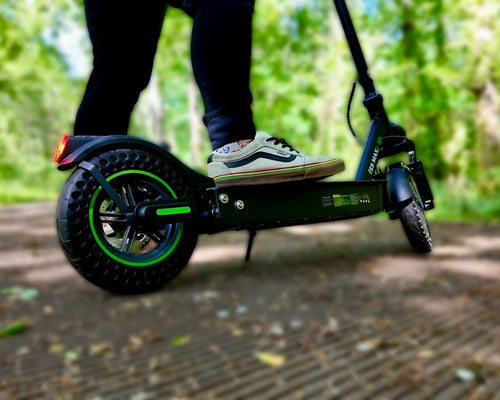
The valve is usually on the tyre sidewall, though the rear valve can sit close to the motor or frame on some models. Rotate the wheel gently until you have clear access, rather than forcing the pump at an angle.
Step 3: Attach the Pump
Line the pump head up with the valve and press it on firmly and straight. For a Presta valve, unscrew the small tip first. If the valve is hard to reach, a valve extender makes the connection easier.
Step 4: Inflate to the Recommended PSI
Pump slowly and check the gauge often. Most electric scooters call for 40 to 50 PSI, but always confirm the figure on your tyre sidewall or manual, since it varies by model and tyre type. Stop as soon as you reach that number. Overinflating can weaken the tyre wall and reduce grip, which matters most on off road electric scooter tyres built for rougher ground.
Step 5: Secure the Valve Cap
Once you have hit the right pressure, remove the pump and screw the cap back on. The cap keeps dirt and moisture out of the valve and stops the slow leaks that come from a loose or missing cap.
Pro Tips to Avoid Tyre Damage
Never chase a higher number than the manufacturer recommends. Exceeding it stresses the tyre wall and can cause a blowout. Check your tyres weekly if you ride daily, or every two to four weeks for lighter use, and look for cracks, cuts, or flat spots while you are at it. Invest in a pump with an accurate gauge too, since a cheap one that reads wrong leaves you over or under inflated without knowing it.
Common Mistakes New Riders Make
-
Riding on a soft tyre. Low pressure drains the battery faster and increases puncture risk.
-
Skipping the gauge. A pump without one is a guess every time, and guessing leads to uneven wear.
-
Forcing the pump at an angle. This bends the valve stem and causes slow leaks that are easy to miss.
-
Leaving the cap off. A missing cap lets in grit and moisture that shorten a tyre's life.
How Often Should You Check Your E Scooter Tyre Pressure?
How often you check depends on how often you ride. Daily riders should check weekly, since regular use loses air faster. Casual riders can get away with checking every two to four weeks, though tyres still lose a little air over time even sitting still.
Watch for warning signs between checks too. A scooter that feels wobbly, sluggish, or visibly low on one side is telling you it needs air before your next scheduled check.
Riding Rules to Know Before You Head Out (UK)
It also helps to know where you can legally use a privately owned electric scooter. In the UK, riding one on public roads, pavements, or cycle lanes is not currently allowed, regardless of tyre condition. Private e scooters can be ridden on private land with the landowner's permission, and some areas run government approved rental schemes with their own rules. For the current position, see isinwheel's UK e-scooter usage notice.
Shop Reliable Electric Scooters at isinwheel
If you are shopping for a new ride or an upgrade, isinwheel electric scooters are built with durable tyres, dependable batteries, and easy maintenance in mind, from lightweight foldable models to rugged options with off road tyres. Check out electric scooter tyres if yours needs a refresh, or browse the off road electric scooter collection for tougher terrain.
Conclusion
Pumping an e scooter tyre correctly takes a few minutes but makes a real difference to how your scooter rides, how far the battery takes you, and how long the tyres last. Find the valve, check the recommended PSI, inflate slowly, and cap it off. Do this every week or two, and you will avoid most of the punctures and handling issues that catch new riders off guard.
FAQs
How do I pump up an electric scooter tyre?
Locate the valve, check the recommended PSI on the sidewall or manual, attach a compatible pump straight onto the valve, and inflate gradually while watching the gauge. Stop once you reach the recommended figure, then replace the valve cap.
How much air do you put in an electric scooter tyre?
Most electric scooters call for between 40 and 50 PSI, though the exact figure depends on the model. Check the tyre sidewall or your scooter's manual for the precise number before inflating.
How do I put air in a scooter tyre without a pressure gauge?
It is best to use a pump with a built in gauge, or a separate one, since guessing the pressure risks overinflation or underinflation. If you must inflate without one, add air in short bursts and check the tyre firmness by hand, then get it properly measured as soon as you can.
What is the correct e scooter tyre pressure?
The correct pressure is printed on the tyre sidewall or listed in your scooter's manual, usually between 40 and 50 PSI. Riding below this range increases rolling resistance and puncture risk, while riding above it reduces grip and comfort.
How do I check electric scooter tyre pressure?
Remove the valve cap, press a pressure gauge onto the valve, and read the PSI. Compare the reading to the recommended pressure on the sidewall or manual, and add air if it is running low.
The Latest Posts


Explore isinwheel products
City E Scooter | Off-Road Scooter
Fastest Scooter | Kids Scooters










Leave a comment