













How High Bike Seat Should Be: Find Your Perfect Saddle Height
Saddle height is the single most important adjustment for a comfortable and efficient ride. If your bike seat is too high or too low, you may experience knee pain, lower back strain, or rocking hips while pedaling.
In this guide, we’ll show you exactly how high your bike seat should be and provide step-by-step methods to measure, adjust, and fine-tune your saddle for maximum comfort and performance.
How High Should Your Bike Seat Be?
Your bike seat should be set so that your knee is bent 30–40 degrees when your foot is at the bottom of the pedal stroke. This is the ideal position for efficient pedaling, reducing strain on your knees and lower back, and preventing discomfort or injury. A correctly adjusted bike saddle height also keeps your hips stable and your feet level on the pedals.
Setting your seat at the right height improves pedaling power, comfort, and safety. With the proper bike seat height, you can ride longer with less fatigue, maintain better posture, and enjoy a smoother, more controlled cycling experience.
Methods to Set the Correct Saddle Height
Finding the correct bike seat height is essential for comfort, efficiency, and injury prevention. There are several reliable methods you can use to determine the ideal saddle height, ranging from simple practical techniques to formula-based calculations. Using these methods together ensures your bike is set up for the best pedaling performance.
Heel Method
The heel method is a simple, reliable way to determine your initial bike saddle height. Sit on your bike and place your heel on the pedal at its lowest point. Pedal slowly and observe your body mechanics.
If your hips rock side-to-side, the saddle is too high. If your legs feel cramped or overextended, it is too low. Adjust the saddle in small increments of 1–2 centimeters and test again until your pedaling is smooth and your hips remain stable.
This method ensures your knees maintain a safe angle, reduces strain on the joints, and minimizes the risk of common cycling injuries such as knee pain and lower back strain. It is especially useful for beginners and casual riders as a practical, hands-on approach to optimal saddle adjustment.
Smartphone Camera or Video Method
For precise adjustments, recording your pedal stroke using a smartphone or camera provides a clear visual reference. Position the camera at a side angle to capture the full motion of your legs while pedaling.
At the bottom of the pedal stroke, your knee should bend between 30–40 degrees. If the angle is less than 30 degrees, the saddle is too low, which can overwork your quadriceps and strain the front of the knee. If the angle exceeds 40 degrees, the saddle is too high, causing lower back discomfort, hip instability, and reduced pedaling efficiency.
This method allows for fine-tuning based on actual biomechanics, ensuring maximum comfort, smooth pedaling, and proper knee alignment. Recording multiple strokes and reviewing them in slow motion helps achieve the most accurate bike seat height.
Using Formula-Based Calculations
Formulas offer a reliable starting point for calculating bike saddle height based on inseam length. Two commonly used formulas include:
-
LeMond Method: Multiply your inseam (in centimeters) by 0.883 to calculate the distance from the bottom bracket to the top of the saddle. This method is simple and widely used but does not account for crank length.
-
Hamley Method (1.09 Method): Multiply your inseam by 1.09 to determine the distance from the pedal axle to the top of the saddle. This method incorporates crank length, providing a more precise measurement for correct knee extension and optimal pedaling mechanics.
After calculating your saddle height using these formulas, verify and fine-tune it with the heel method or camera analysis. Combining formula-based calculations with practical adjustments ensures the correct bike seat height, reduces the risk of injury, improves pedaling efficiency, and maximizes comfort for every ride.
Measuring Saddle Fore/Aft (Setback) and Tilt
Adjusting your saddle fore/aft position and saddle tilt is just as important as setting the correct bike seat height. Proper placement improves comfort, pedaling efficiency, and prevents injuries to your knees, lower back, and hands. Ensuring your saddle supports your sit bones and distributes weight evenly makes every ride smoother and more powerful.
Fore/Aft Position (Saddle Setback)
The fore/aft position, or saddle setback, determines how far your saddle sits relative to the bottom bracket. To measure it, place your bike vertically against a wall or in a stationary trainer. Measure the horizontal distance from the rear wheel to the bottom bracket, then measure from the rear wheel to the tip of the saddle. Subtract the first measurement from the second to find the proper saddle setback.
Correct saddle fore/aft positioning keeps your knees properly aligned over the pedal axle, balances weight between saddle and handlebars, and enhances pedaling efficiency. Small adjustments can significantly reduce strain on your knees and lower back during long rides.
Saddle Tilt
Most bike saddles are designed with a 0–6° tilt range. To set the correct tilt, place a level board on your saddle and measure the angle with a smartphone or digital inclinometer. Adjust the tilt so that your sit bones (ischial tuberosities) are fully supported, and your hands do not bear excessive weight.
A properly adjusted saddle tilt prevents sliding forward or backward, reduces pressure on hands and wrists, and stabilizes your pelvis while pedaling. Even slight forward or backward changes can dramatically improve comfort, especially on longer rides.
Signs Your Bike Seat Height Is Incorrect
Riding with the wrong bike seat height can cause discomfort, reduce efficiency, and even lead to injury over time. Recognizing the signs early helps you make adjustments for a smoother, more comfortable ride.
-
Rocking hips side-to-side: If your pelvis moves while pedaling, your saddle is likely too high or too low. This can reduce pedaling efficiency and place extra strain on your lower back.
-
Excessive pressure on hands or sit bones: When your saddle doesn’t support your weight correctly, your hands and wrists take on more load, and your sit bones may feel sore or numb.
-
Knee discomfort: Pain at the front of the knee often indicates a low saddle, while pain behind the knee can mean it’s too high. Uneven muscle strain between your quadriceps and hamstrings is another common sign.
-
Pedaling inefficiency: Stretching to reach the bottom of the pedal stroke or losing contact during rotation is a clear indicator that your saddle height needs adjustment.
Paying attention to these warning signs allows you to set your bike seat correctly. A properly adjusted saddle ensures smooth pedaling, balanced muscle use, and better overall comfort, helping you ride longer without pain.
Fine-Tuning and Testing Your Bike Saddle
After setting your bike seat height, fore/aft position, and tilt, it’s important to fine-tune your bike saddle for optimal comfort and performance. Start with short rides to test your adjustments and observe how your body responds. Pay attention to any discomfort in your knees, lower back, hands, or sit bones.
Make small, incremental changes to your saddle height or tilt rather than large adjustments. Even a 5-millimeter change can make a noticeable difference in comfort and pedaling efficiency. This approach allows you to gradually find the perfect bike seat position without overcompensating.
If discomfort persists after fine-tuning the saddle, consider other factors such as handlebar height or cleat alignment. Proper handlebar positioning affects your posture and weight distribution, while correct cleat alignment ensures your feet engage pedals efficiently. Combining these adjustments with careful saddle testing helps create a comfortable and efficient cycling setup.
Choosing the Right Saddle
Selecting the best bike saddle is just as important as setting the correct height, tilt, and fore/aft position. Saddle shape, width, and material all affect saddle comfort and how well your sit bones are supported during rides.
Ensure the saddle matches the width of your sit bones (ischial tuberosities) so that your weight is properly distributed. A saddle that is too narrow or too wide can cause discomfort, numbness, or pressure points, even if your bike seat height is perfect.
It’s often helpful to test multiple saddles before settling on one. Everyone’s anatomy is different, and finding a saddle that provides consistent sit bone support will improve comfort, pedaling efficiency, and reduce fatigue on longer rides.
Conclusion
Setting the correct bike seat height ensures comfort, efficient pedaling, and reduces the risk of injury. Aim for a 30–40° knee bend at the bottom of the pedal stroke for the perfect bike saddle height. Adjust using the heel method or a camera, and test on short rides to fine-tune for smooth pedaling and proper weight distribution.
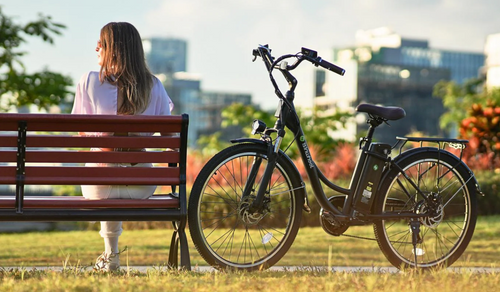
For riders looking to combine comfort with performance, isinwheel e-bikes offer adjustable saddles, versatile designs, and reliable power. With models suited for commuting, recreation, or long-distance cycling, isinwheel makes it easy to enjoy every ride while maintaining the optimal saddle adjustment for your body.
FAQs
How do I know my saddle height is correct?
Your saddle height is correct when your knees bend around 30–40° at the bottom of the pedal stroke. At the proper height, pedaling is smooth, hips stay stable, and your feet remain level without excessive toe or heel drop. Proper bike saddle height reduces strain on your knees and lower back, improves comfort, and increases pedaling efficiency.
What is the correct seat height for a bike?
The correct bike seat height allows a natural 30–40° knee bend at the bottom of the pedal stroke. You can measure this using the heel method, video or smartphone analysis of your pedal stroke, or formulas like the LeMond or Hamley methods. Correct seat height ensures a comfortable ride, prevents injury, and maximizes pedaling power.
Should my bike seat be higher than my handlebars?
Whether your bike seat is higher than the handlebars depends on your bike and riding style. On road or racing bikes, the seat is usually slightly higher for better pedaling efficiency. On hybrid bikes, city, or comfort bikes, the seat and handlebars are closer together for an upright, comfortable posture. Always prioritize comfort and proper riding position over style.
What is the 1.09 saddle height method?
The 1.09 method, also called the Hamley method, calculates saddle height based on your inseam. Multiply your inseam in centimeters by 1.09 to find the distance from the pedal axle to the top of the saddle when the pedal is at the six o’clock position. This method accounts for crank length and is a reliable way to achieve optimal saddle adjustment.
The Latest Posts


Explore isinwheel products
City E Scooter | Off-Road Scooter
Fastest Scooter | Kids Scooters








Leave a comment