Learning how to start an electric scooter is straightforward once you know what to check and which controls to use. For a first time rider, though, the process can feel less obvious than expected. Is the battery charged? Is the brake released? Does the e-scooter need a push before the throttle works? This guide explains the basic startup process, what to check before moving, and what to do if your electric scooter will not start. It also covers the isinwheel S9 adult electric scooter as a beginner friendly example, while keeping the advice useful across different electric scooter models.
Before You Start: UK Riding Rules
Privately owned electric scooters cannot currently be ridden legally on UK public roads, pavements, cycle lanes or other public spaces. They may be used on private land with the landowner's permission. Use a suitable private area for practice and follow the manufacturer's instructions.
How to Start an Electric Scooter Step by Step
1. Check the Battery Before Switching On
Start with the battery. A low or empty battery is one of the simplest reasons an electric scooter may appear not to work. Check the charge indicator on the display if your e-scooter has one, and charge the battery before riding if the level is low. For a new e-scooter, it is sensible to make sure the battery has been charged according to the user manual before the first use.
2. Give the Electric Scooter a Quick Safety Check
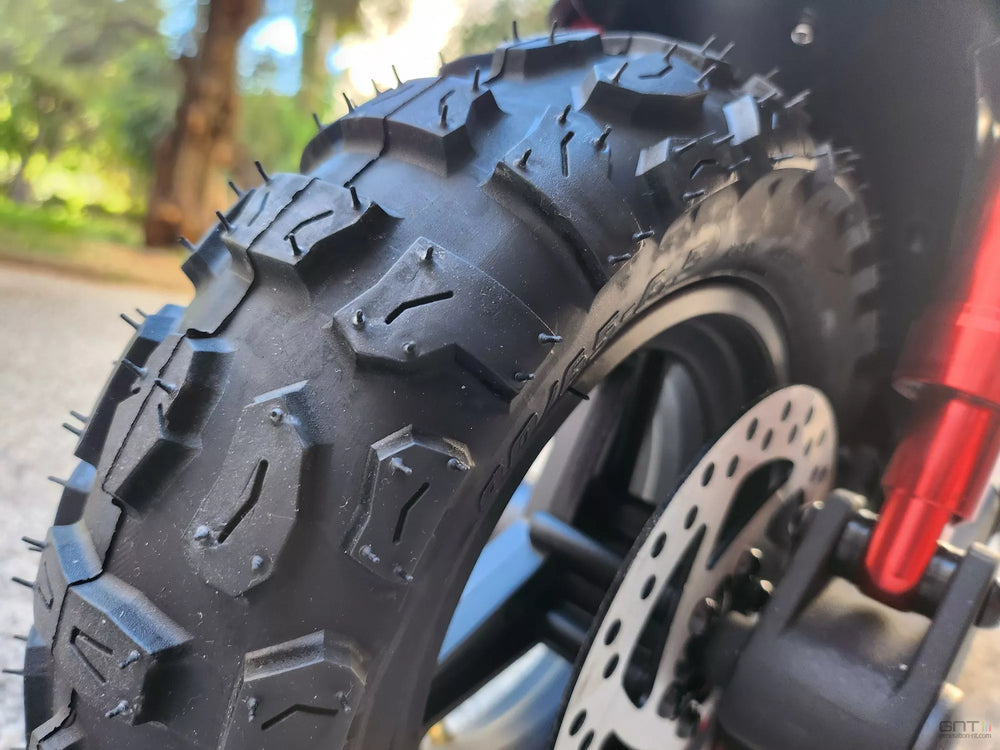
Take a few seconds to look over the e-scooter before you power it on. Check the tyres for obvious damage, make sure the folding mechanism is properly secured if the model folds, and check that the brake controls feel normal. Look for loose parts, damaged cables or anything that seems out of place. These small checks are easy to skip when you are eager to ride, but they can catch a problem early.
• The battery has enough charge for your planned practice session.
• Tyres appear to be in good condition and correctly inflated according to the manufacturer's guidance.
• Brakes operate normally and are not being held or obstructed.
• Handlebars and folding parts are securely locked in position.
• No visible damage, loose cables or other obvious faults are present.
3. Find the Power Button
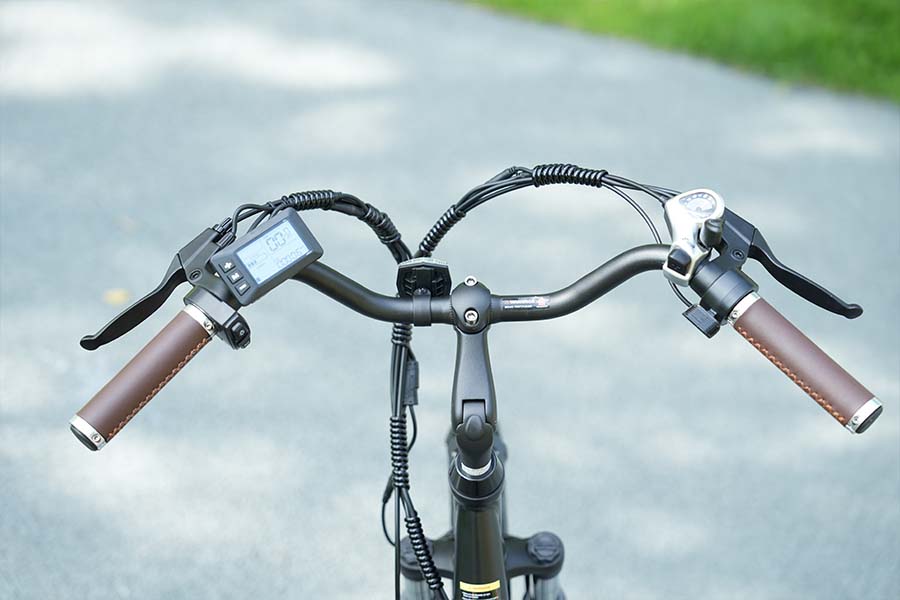
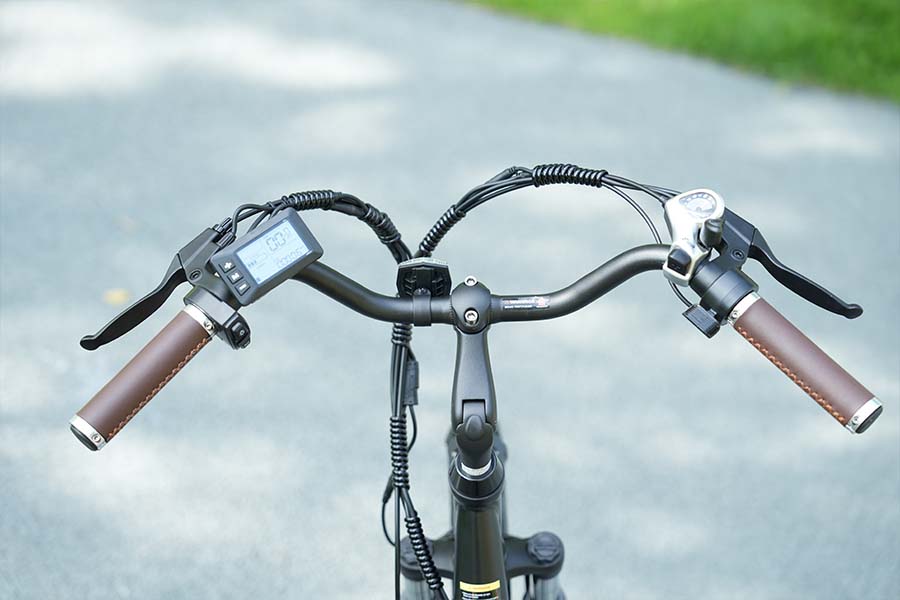
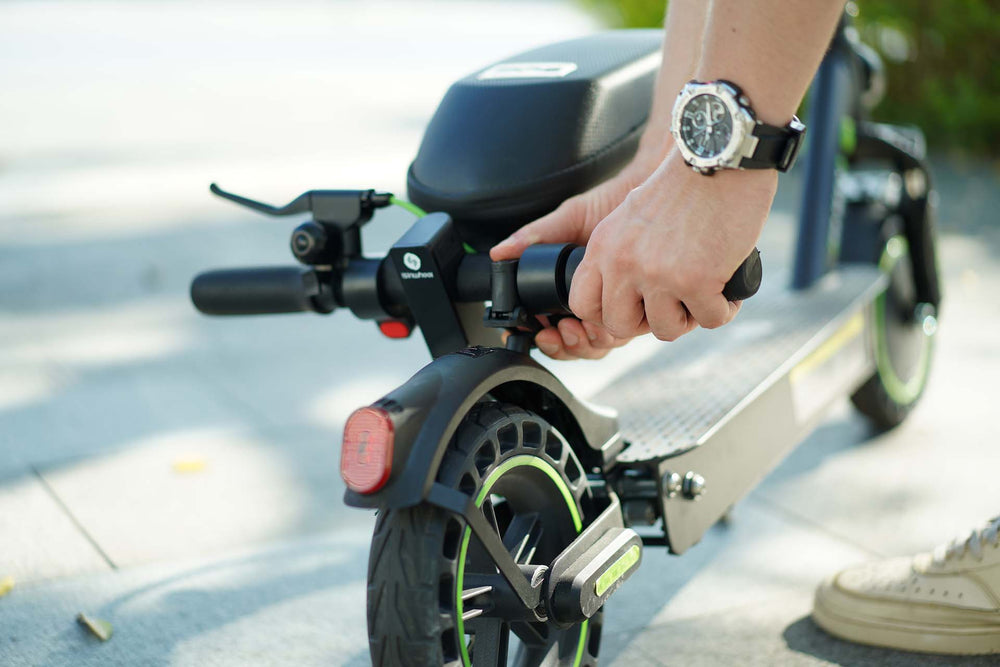
Most electric scooters place the power control on or near the handlebar display. Look for the standard power symbol or check the user manual if you are unsure. The exact button layout can vary between models, so do not assume that every e-scooter uses the same sequence.
4. Turn On the E-Scooter
Use the power control exactly as described in your model's manual. Depending on the e-scooter, this may involve a short press or pressing and holding the power button for a few seconds. Once the display comes on, check the battery level and any warning symbols before touching the accelerator. If the display shows an error or the scooter continues to beep, stop and check the manual rather than trying to ride through the warning.
5. Check Whether Kick Start Is Required
Some electric scooters use a kick start system. In this setup, the motor will not engage while the scooter is completely stationary. The rider first gives the e-scooter a small push with one foot, then gently uses the accelerator once the e-scooter is moving. This feature helps reduce accidental acceleration from a standstill.
If your e-scooter supports zero start operation, the starting method can be different. Always follow the settings and instructions for your specific model rather than assuming that the same method applies to every electric scooter.
6. Start Slowly and Practise the Controls
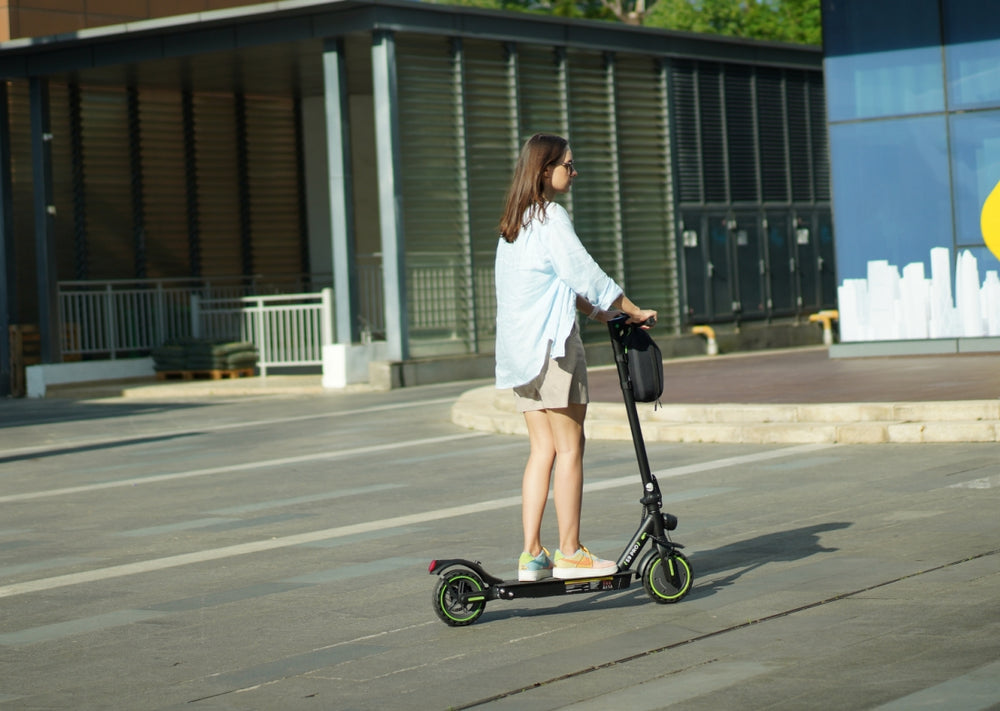
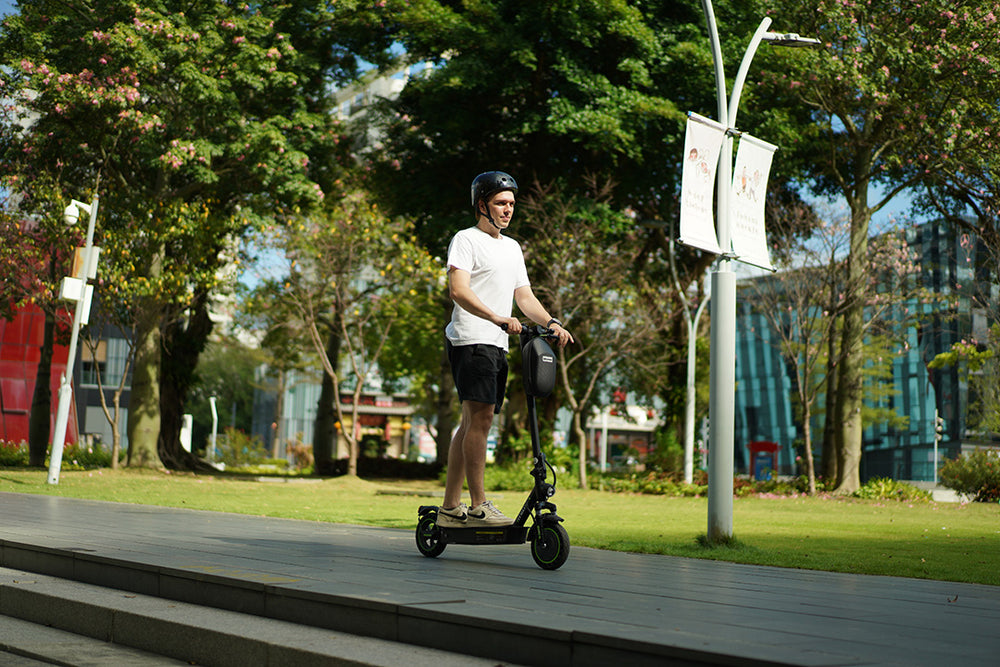
For your first few attempts, choose a flat, clear private area with enough room to stop comfortably. Keep both hands on the handlebars and apply the accelerator gently. Practise moving slowly, releasing the accelerator and using the brakes smoothly. Once the basic controls feel familiar, practise wide turns and controlled stops before increasing speed.
Is the isinwheel S9 a Good Electric Scooter for Beginners?
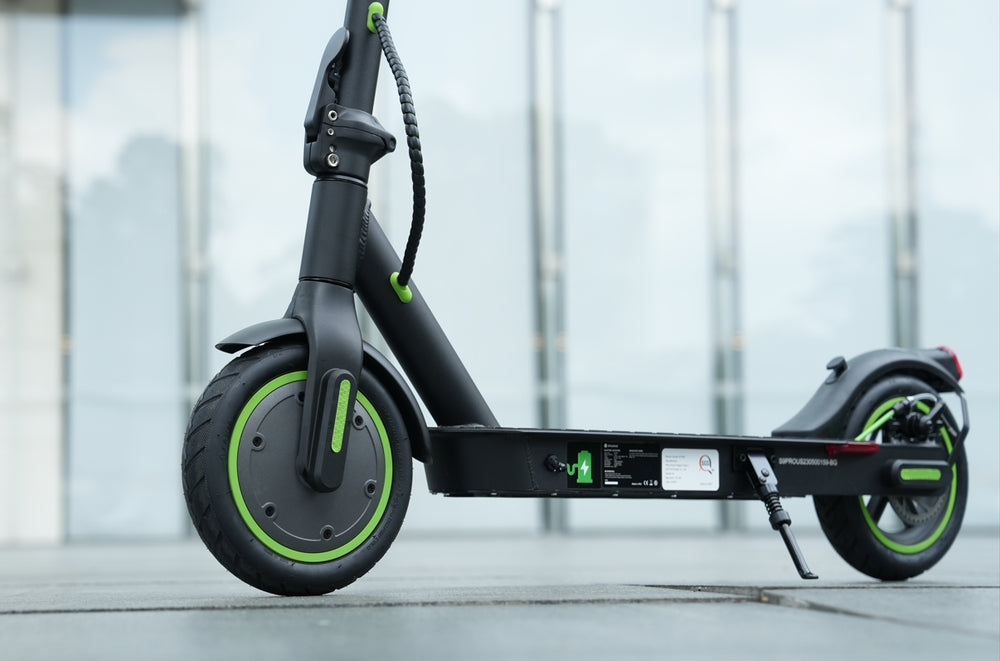
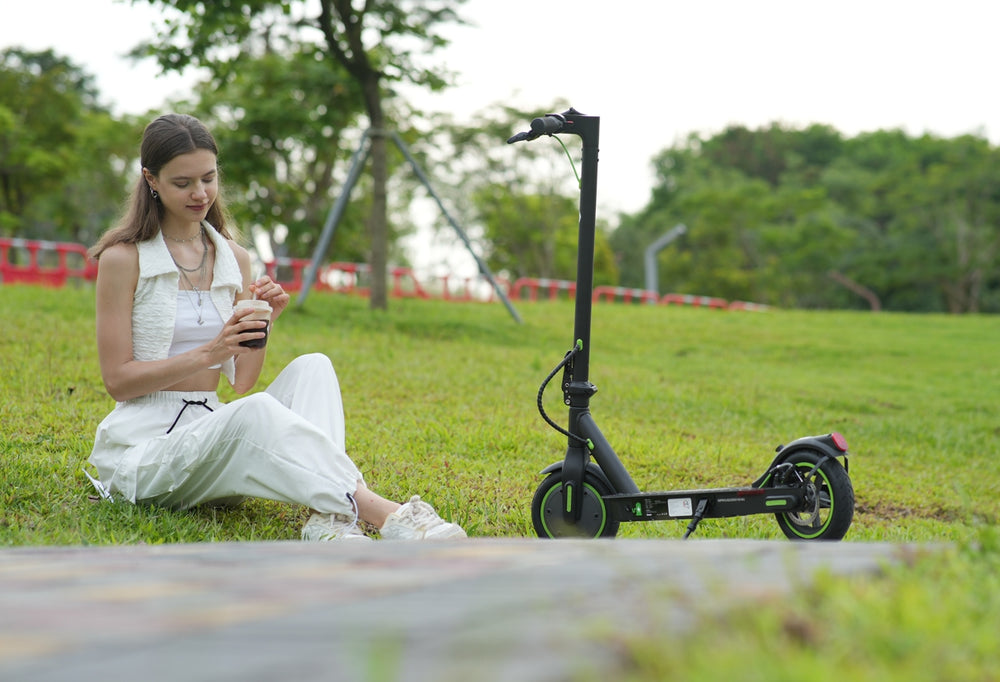
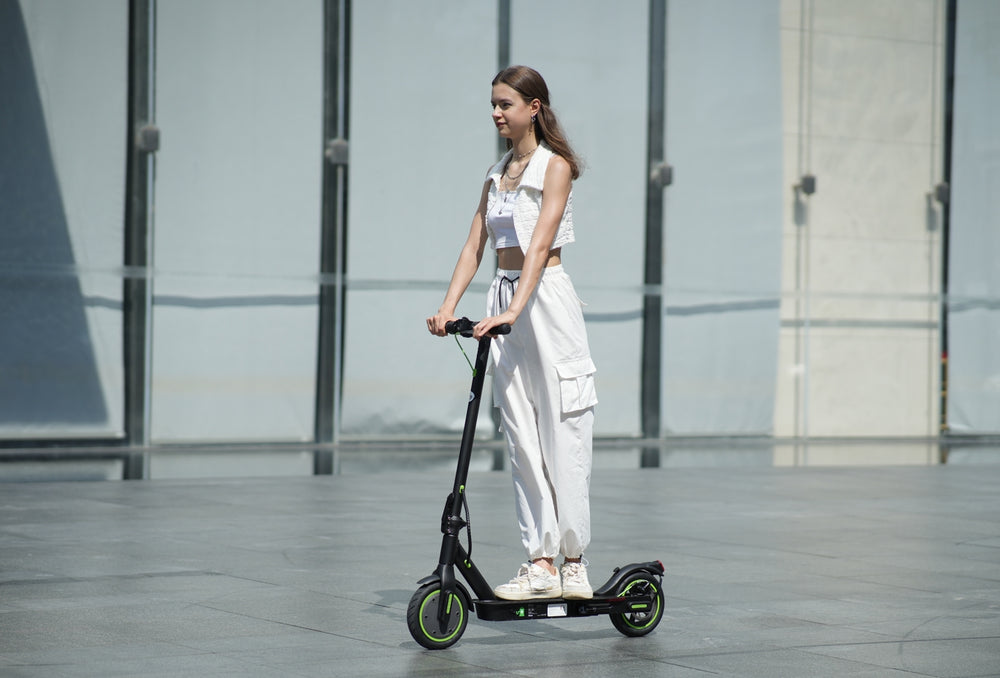
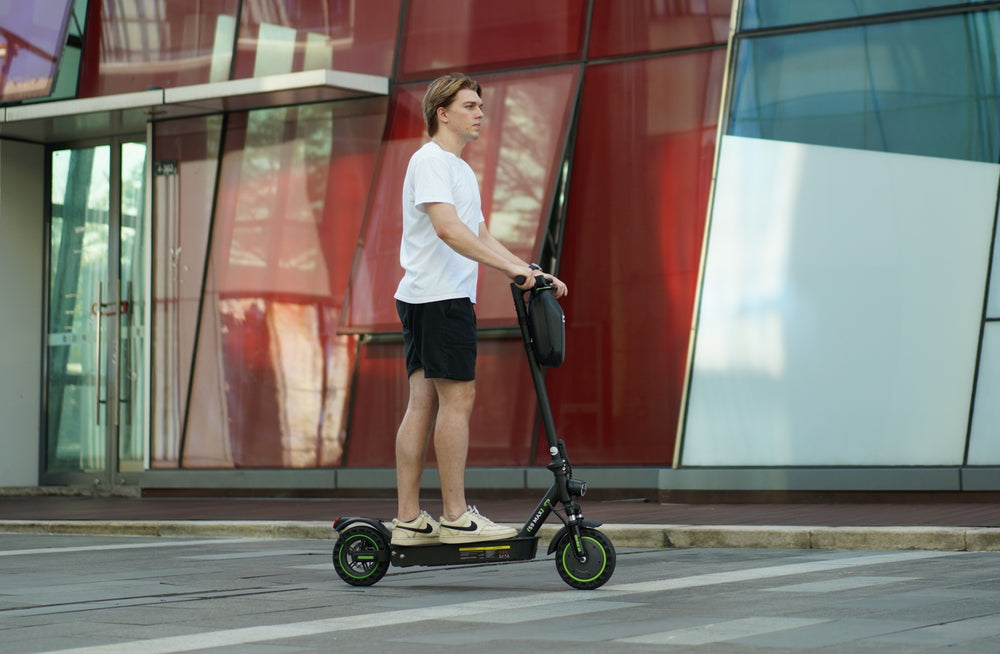
The isinwheel S9 adult electric scooter is a useful option for beginners who want a relatively simple setup and familiar controls. On the current UK product page, S9 version is shown with a claimed range of up to 15.5 miles and a maximum speed of 18.6 mph. The same product page also lists a smart display, a 350W brushless motor, front and rear lighting, app connectivity and a folding design.
For a new rider, the display is particularly useful because it provides information such as speed and battery status. The app can also provide access to e-scooter functions, including locking and monitoring key riding information. If you are considering this model, review the supplied instructions before your first practice session and learn what each control does while the e-scooter is stationary.
What to Do If Your Electric Scooter Will Not Start
If the e-scooter does not turn on, work through the basics before assuming that there is a serious fault. Start by checking the charger and battery level, then make sure the power control is being used correctly. If the display comes on but the motor does not respond, check whether the e-scooter uses kick start and whether any lock or app based security feature is active.
Try a Simple Restart
Turn the electric scooter off, wait briefly and then switch it on again. A restart can clear a temporary electronic issue. If the problem continues, check the user manual for the model specific error message or indicator shown on the display.
Check the Controls and Connections
Look for obvious issues such as a loose connector, damaged cable, obstructed control or brake that is not returning correctly. Do not open the battery pack or attempt electrical repairs unless you are qualified and the manufacturer specifically permits the work. If you cannot identify the problem safely, contact the manufacturer's support team.
Quick Troubleshooting Checklist
• The battery has sufficient charge.
• The correct power button sequence has been used.
• Any required app activation or lock has been completed.
• The e-scooter's folding and safety mechanisms are properly secured.
• No warning message or error code is being ignored.
• The e-scooter has been restarted if the issue appears temporary.
• Technical support has been contacted if the problem remains.
Tips for Your First Electric Scooter Ride
• Wear a properly fitted helmet and suitable protective equipment.
• Practise on private land with permission from the landowner.
• Start at the lowest comfortable speed setting.
• Use both feet securely and keep your hands on the handlebars.
• Brake progressively and allow extra stopping distance while learning.
• Avoid distractions such as using your phone while riding.
FAQs
How to Start an Electric Scooter?
First check the battery, tyres, brakes and folding mechanism. Then switch on the e-scooter using the model specific power button sequence, check the display for warnings and confirm whether kick start is required before using the accelerator.
Why Won't My Electric Scooter Turn On?
A low battery, incorrect power button sequence, active lock or a technical fault can prevent an electric e-scooter from starting. Check the charge level and manual first, then restart the e-scooter. If the problem remains, contact the manufacturer's support team.
How to Get Started with an Electric Scooter?
Begin by learning the controls and completing a quick safety check. Practise on a flat, clear private area, start slowly and focus on smooth acceleration, steering and braking. For UK riders, remember that privately owned electric scooters can only currently be ridden on private land with the landowner's permission.































Leave a comment