The eco-friendly electric scooter has become one of the most practical answers to sustainable urban travel, as more people in the UK look for affordable alternatives to rising fuel costs and congested city streets. isinwheel offers a range of electric scooters designed to combine strong performance, long range, and a minimal environmental footprint. Here is why switching to an isinwheel could reduce your daily carbon footprint while keeping running costs remarkably low.
Electric Scooter vs Car: The Carbon Comparison That Might Surprise You
Transport is one of the largest sources of CO₂ emissions in the UK, with private cars accounting for a significant share of urban pollution each day. An electric scooter for commuting offers a genuinely cleaner alternative for short and medium journeys.
Unlike petrol or diesel vehicles, electric scooters produce zero direct CO₂ during use. Even when you factor in the emissions from electricity generation, the overall environmental impact remains far lower. A typical car emits around 120 g of CO₂ per kilometre. An electric scooter, by comparison, can produce under 6 g per kilometre depending on the energy source used.
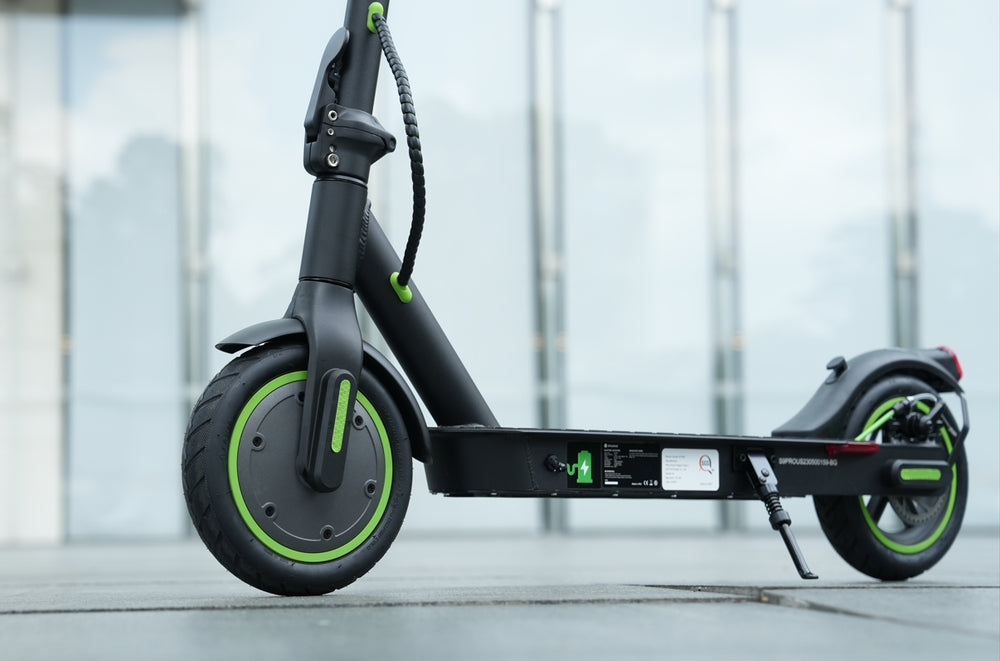
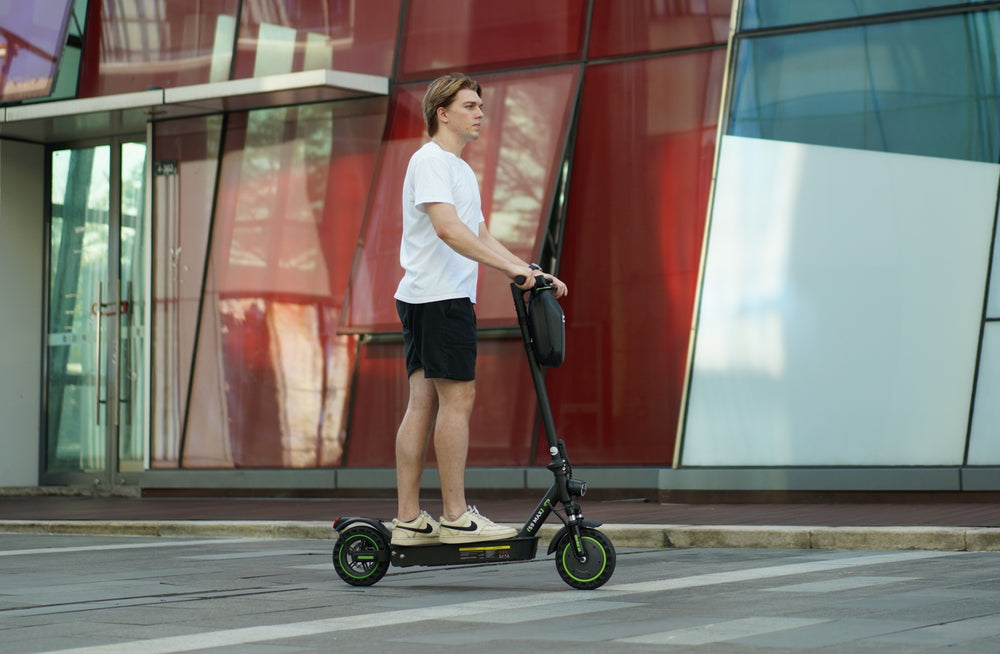
Models like the isinwheel GT4 Adult E-Scooter consume very little energy relative to the distance covered, making them both environmentally friendly and genuinely cost-effective for everyday journeys around town.
How Much Does 1 Mile on an isinwheel Electric Scooter Actually Cost?
Beyond the environmental side, the isinwheel electric scooter stands out for its surprisingly low running costs. Owning a car involves fuel, insurance, MOT, servicing, parking, and depreciation. The figures add up faster than most people realise. An electric scooter cuts most of those costs entirely.
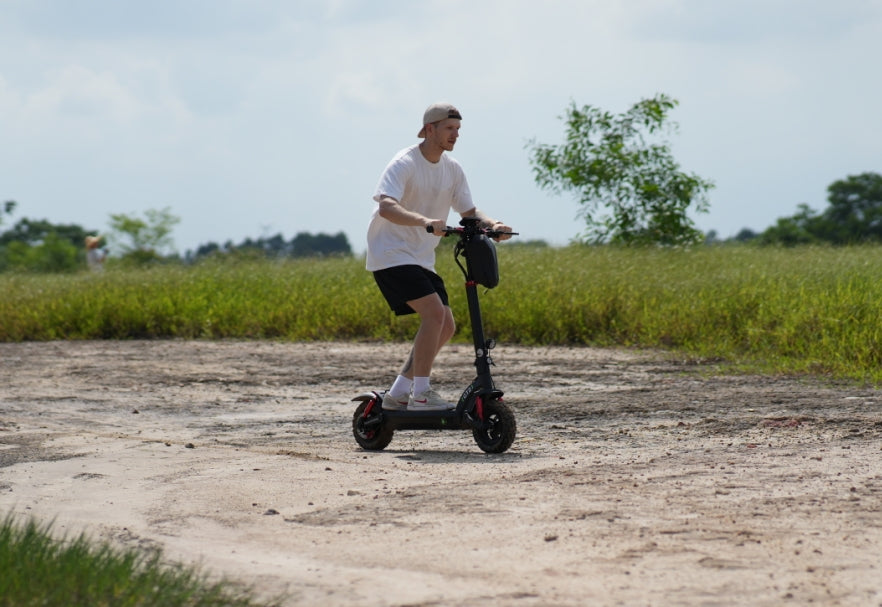
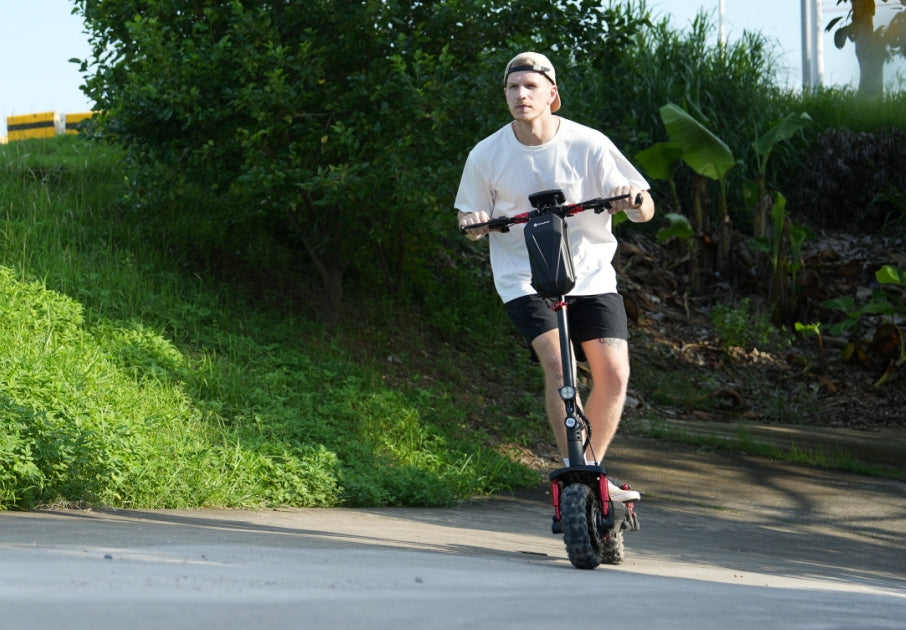
Take the isinwheel GT4 Adult E-Scooter as a concrete example. It is equipped with a 58.8V 18.2Ah battery and a dual motor delivering up to 2,400W of peak power, with a range of up to 50 miles per charge. Its energy consumption works out at roughly 1 kWh per 100 km. At the UK average electricity rate of approximately £0.25 per kWh, that translates to well under £0.01 per mile in energy costs alone.
A petrol car typically costs between £0.12 and £0.15 per mile just in fuel. For a commuter covering 3,000 miles per year on a scooter instead of a car, the energy saving alone could comfortably exceed £300 annually. isinwheel scooters are built with durable components to keep maintenance costs minimal, and the brand offers responsive customer support throughout.
The isinwheel Battery: Lifespan, Recycling, and Real Environmental Impact
Battery production is where electric vehicle scrutiny is often focused, and fairly so. Manufacturing a lithium-ion battery does generate CO₂. The picture is more nuanced than critics sometimes suggest, though.
isinwheel batteries are built to endure hundreds of charge cycles, giving them a lifespan of several years even under daily use. Across the range, from the compact isinwheel S9 Portable E-Scooter through to the high-capacity isinwheel GT4 Adult E-Scooter and the Landturbo Pro E-Scooter, batteries run from 36V 7.5Ah up to 58.8V 18.2Ah, covering ranges of approximately 18.6 miles to 50 miles depending on the model.
For recycling, isinwheel e-scooters are aligned with UK WEEE (Waste Electrical and Electronic Equipment) regulations. At end of life, batteries can be taken to registered collection points where materials such as lithium, cobalt, and nickel are extracted and returned to production cycles. isinwheel actively encourages its riders to follow these responsible disposal routes.
Soft Mobility in UK Cities: How isinwheel Supports Greener Urban Travel
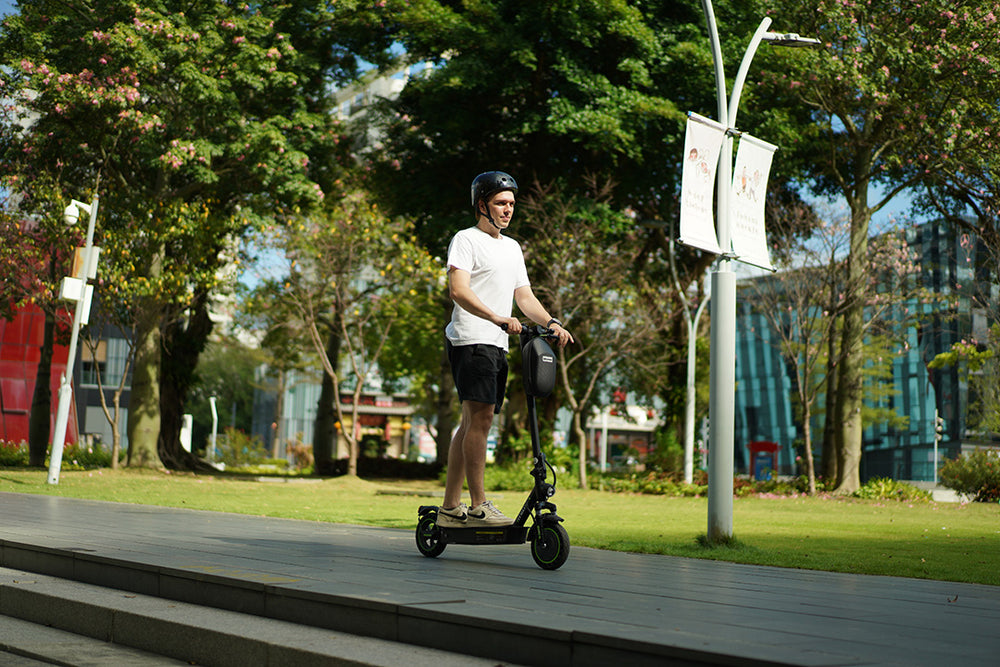
Electric scooters sit at the heart of how UK cities are rethinking movement. With more urban areas expanding low-emission zones, improving cycling infrastructure, and tightening restrictions on older petrol vehicles, an electric scooter offers a natural fit for modern city life.
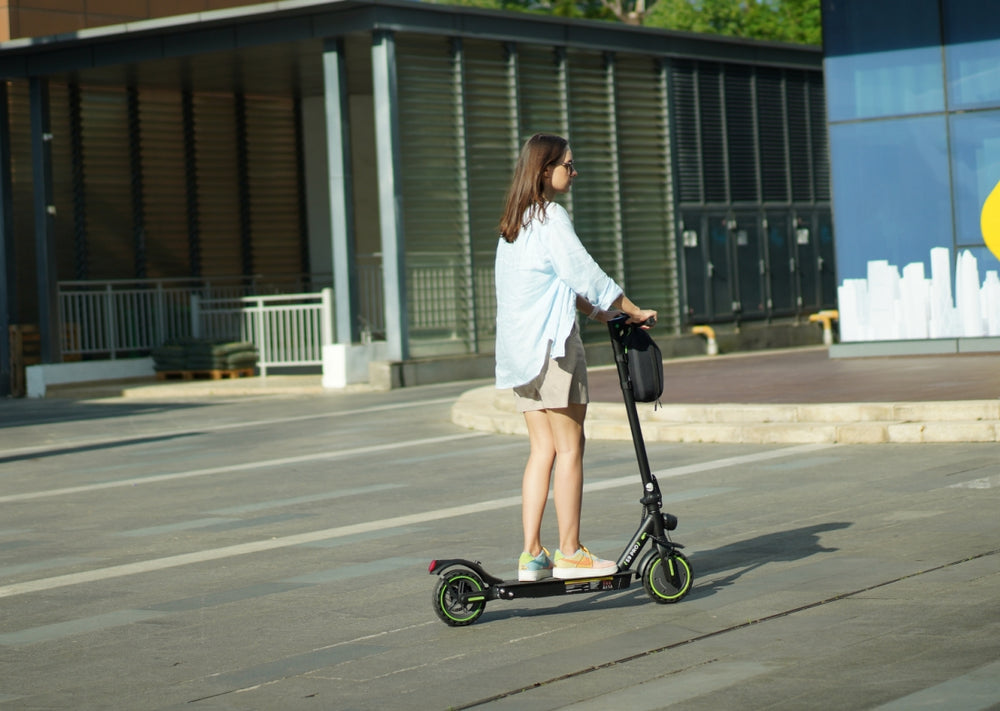
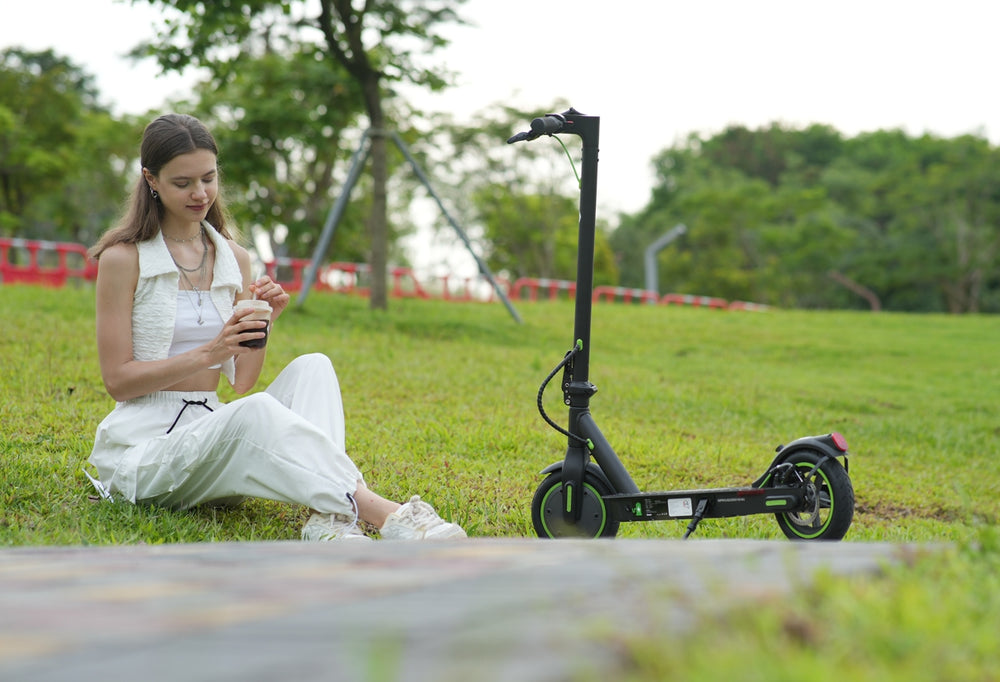
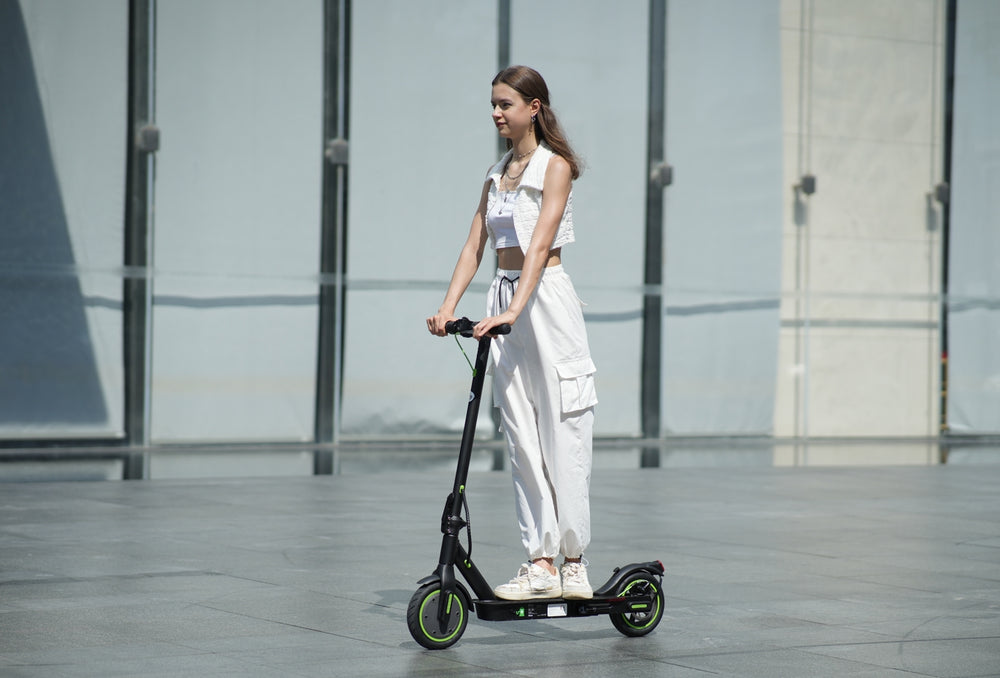
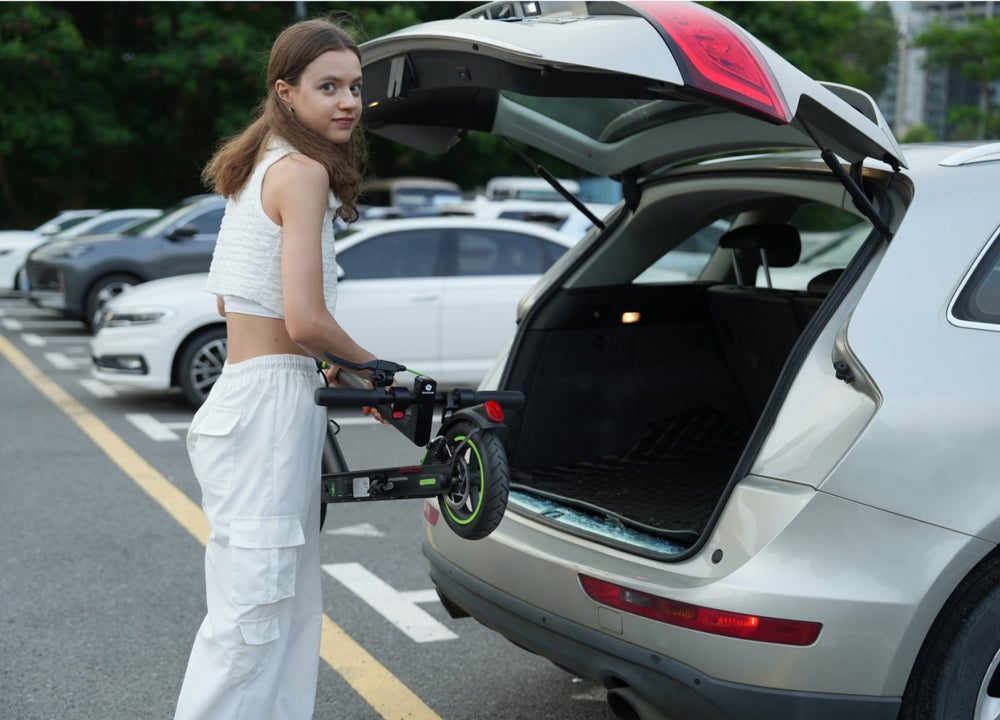
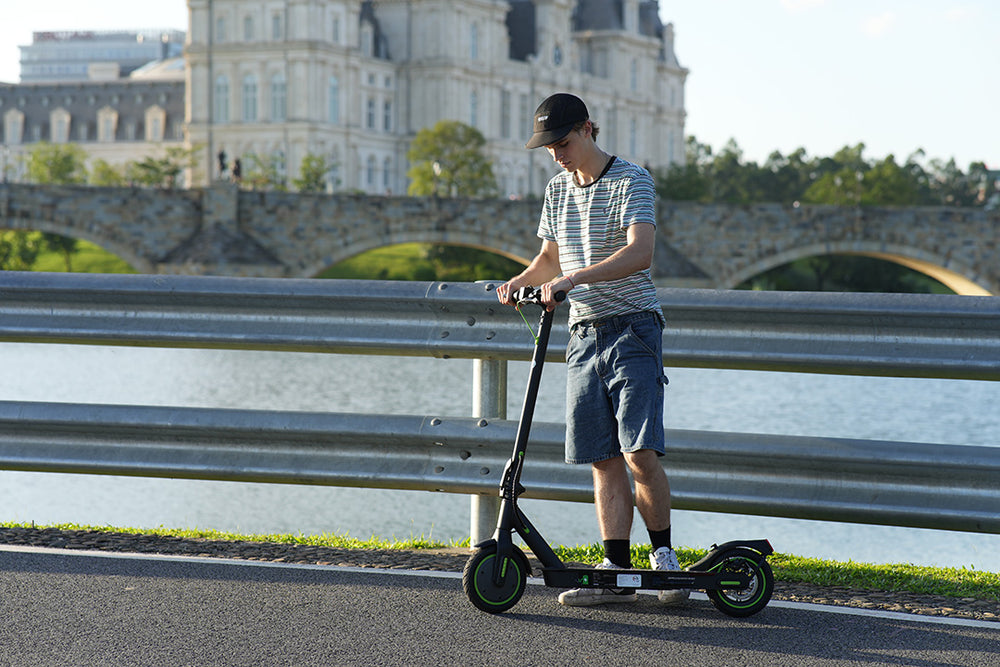
isinwheel has built its range around real-world urban use. The isinwheel S9 Portable E-Scooter weighs just 13.8 kg and suits daily commuting in compact city environments. For riders needing more range and versatility, the isinwheel GT4 Adult E-Scooter and the Landturbo Pro E-Scooter offer greater power and longer rides between charges.
Choosing an isinwheel for your daily journeys means you are actively contributing to reducing congestion, cutting noise pollution in residential areas, improving local air quality by eliminating direct nitrogen oxide and fine particle emissions, and supporting a broader culture of lighter, smarter urban travel.
Calculate Your Annual CO₂ Saving with an isinwheel Electric Scooter
Curious how much of a difference making the switch actually makes? Here is a simple method for estimating your annual CO₂ reduction.
Step 1: Estimate the miles per year you would replace with a scooter. Let us say 3,000 miles, roughly 10 to 12 miles per day on weekdays.
Step 2: Calculate car emissions. At approximately 193 g CO₂ per mile, 3,000 miles in a car produces around 580 kg of CO₂ per year.
Step 3: Calculate scooter emissions. At under 9.7 g per mile, the same distance on an isinwheel GT4 Adult E-Scooter produces around 29 kg of CO₂.
Result: Switching to an isinwheel saves around 550 kg of CO₂ per year. That is roughly equivalent to planting 25 trees, or skipping a return flight from London to Barcelona.
The car versus scooter comparison rarely includes the manufacturing footprint of avoiding a new car purchase entirely, which can account for between 6 and 35 tonnes of CO₂ on its own. As a genuine electric scooter alternative to the car, isinwheel offers a practical, eco-conscious, and affordable way to cut emissions without giving up convenience.
Frequently Asked Questions
Q1: What is the exact energy consumption of the isinwheel GT4 Adult E-Scooter?
The isinwheel GT4 Adult E-Scooter is equipped with a 58.8V 18.2Ah battery and dual motors producing a combined peak output of 2,400W, with a range of up to 50 miles per charge. Under normal riding conditions on flat terrain at a moderate pace, energy consumption sits at approximately 1 kWh per 100 km. At the current average UK electricity rate of around £0.25 per kWh, that works out to less than £0.25 for every 100 km ridden. A remarkably low cost for daily travel.
Q2: How does isinwheel handle battery recycling at end of life?
isinwheel batteries comply with UK WEEE regulations. At the end of life, batteries should be taken to an approved collection point, such as a local household recycling centre or a registered retailer. Valuable materials including lithium, cobalt, and nickel are then recovered and reintroduced into new production cycles. isinwheel encourages all UK customers to follow responsible disposal practices.
Q3: Are isinwheel electric scooters eligible for any UK government grants or subsidies?
Electric scooters are not currently covered by the UK government’s plug-in vehicle grant, which focuses on electric cars and motorcycles. Some local councils and combined authorities do offer their own micro-mobility incentive schemes, though these vary across England, Scotland, and Wales. It is worth checking with your local council or visiting the Energy Saving Trust website for details on regional support.
Q4: How long does it take for an isinwheel scooter to offset its carbon footprint from manufacturing?
The carbon footprint of manufacturing an electric scooter is significantly lower than producing a car. For a rider replacing regular car journeys with an isinwheel scooter, the carbon payback period is typically reached within a matter of months. This compares very favourably with electric cars, which can take several years to reach carbon parity.
Q5: Does isinwheel use recycled materials in its scooters?
isinwheel has made durability and repairability central to its design philosophy. The brand does not currently publish a specific percentage of recycled materials used in production. However, robust aluminium and steel frames are built to last, and individual components are designed to be replaced rather than requiring the whole unit to be discarded. That approach to longevity is itself a form of circular economy thinking, reducing the demand for new raw materials over time.























Leave a comment